Author Archives: Myrtle Garcia

When Food Carries Us Through: The Stories Our Comfort Dishes Tell

The Weight of a Wooden Spoon

There’s something profound about the way our hands remember the motions of stirring, even when our hearts feel too heavy to hold much else. I discovered this three winters ago, standing in my kitchen at 2 AM, mechanically whisking bechamel for what would become my grandmother’s lasagna. She had been gone for two weeks, and I hadn’t been able to eat anything that didn’t taste like cardboard. But my hands knew what to do with flour and butter, knew the exact moment when the roux would release its raw edge and bloom into something golden and forgiving.

When Food Carries Us Through: The Stories Our Comfort Dishes Tell

That lasagna didn’t start in my grandmother’s kitchen in suburban Detroit. It came from the rolling hills of Emilia-Romagna, where her great-grandmother learned to layer pasta sheets like love letters between cheese and meat. When Rosa Benedetti left Bologna in 1923, she carried the recipe in her memory alongside her grief for everything she was leaving behind. The dish that fed my family through decades of celebrations and sorrows began as an immigrant’s act of cultural preservation, a way of keeping home alive in a place that didn’t yet feel like home.

Food anthropologists call this “culinary cultural transmission,” but I think of it as the way love travels through time. Each generation adapts the recipe to available ingredients, to changing tastes, to the particular hungers of their moment. Rosa’s original called for fresh pappardelle and wild boar ragu. By the time it reached my grandmother’s hands, it had become something distinctly American: ground beef instead of wild game, cottage cheese stretching the more expensive ricotta, dried herbs when fresh ones weren’t available in 1950s Michigan.

What stays the same isn’t the exact ingredients, but the intention behind them. The way the cook’s hands move with practiced tenderness. The understanding that this dish does more than feed people. It’s medicine for the soul, delivered one careful layer at a time.

Illustration for When Food Carries Us Through: The Stories Our Comfort Dishes Tell

Celebration Flavors That Bridge Worlds

Six months after that midnight lasagna, my daughter announced her engagement. Suddenly, the same kitchen that had been my refuge in grief needed to become a space of joy. Here’s what I’ve learned about the relationship between sorrow and celebration: they’re not opposites. They’re dance partners, each one making the other more meaningful.

For the engagement party, I decided to make mole negro, a recipe I’d been learning from my neighbor Elena, whose family brought it north from Oaxaca. This isn’t a dish you tackle lightly. It requires more than thirty ingredients, three different types of chiles, and the kind of patience that only comes from understanding that some things cannot be rushed. The preparation takes days. The sauce demands hours of careful attention, layers of flavor building like sediment in an ancient riverbed.

Elena’s grandmother would have recognized maybe half the ingredients I used. The chocolate came from Belgium instead of local cacao trees. The almonds were California-grown rather than foraged. But the technique stayed the same: the careful toasting of each spice, the gradual addition of liquids, the final moment when all those different elements suddenly become something greater than their sum.

As I ground chiles and toasted sesame seeds, Elena told me stories about her grandmother’s hands, how they could judge the doneness of tortillas by touch, how she could tell if the mole needed more sweetness just by inhaling its aroma. “Food is how we love people,” Elena said, crushing garlic with the side of her knife. “Even when they’re not here anymore, even when they’re just arriving.”

The Alchemy of Adaptation

What fascinates me most about our comfort foods is how they evolve while keeping their essential character. Take the curry I learned to make during my first year of marriage, when my husband’s Indian mother decided I needed to understand the foundation of good dal. Mrs. Patel’s version traced its lineage back to Gujarat, where her grandmother cooked lentils in clay pots over wood fires, seasoning them with mustard seeds that grew in their own garden.

The recipe she taught me had already traveled across oceans and through decades. The ghee came from an Indian grocery store in New Jersey rather than from buffalo milk churned by hand. The lentils came in plastic bags instead of massive earthenware vessels. But the basic technique stayed the same: the careful heating of oil, the precise moment when mustard seeds begin to pop, the way turmeric blooms when it hits hot fat.

What Mrs. Patel was really teaching me wasn’t just how to cook dal, but how to understand the language of Indian flavors. How cumin speaks to coriander, how asafoetida whispers beneath everything else, how the right amount of salt can make the difference between mere sustenance and actual nourishment. She was giving me tools to comfort her son the way his ancestors had been comforted for generations.

This is the real magic of traditional recipes: they’re not rigid formulas but flexible frameworks. They bend without breaking, adapting to new ingredients and techniques while keeping their essential soul. A Thai curry made with vegetables from a Minnesota farmers market still carries the DNA of its Bangkok origins. A Jewish brisket slow-cooked in a suburban American oven still connects us to the shtetls of Eastern Europe.

When Kitchens Become Sanctuaries

The kitchen becomes a different kind of space when we’re cooking through intense emotion. Time moves differently there. The outside world with its demands and deadlines feels temporarily suspended. There’s just the immediate task at hand: dice the onions, brown the meat, adjust the seasoning. These simple actions become a form of meditation, a way of staying present when everything else feels uncertain.

I think about this whenever I teach cooking classes, watching students’ faces as they work with unfamiliar ingredients. There’s always a moment when the anxiety melts away and something else takes over. Maybe it’s the repetitive motion of kneading bread, or the way garlic perfumes the air when it hits hot oil, or simply the realization that they’re creating something beautiful with their own hands. Food has this remarkable ability to ground us, to remind us of our capacity for nurturing even when we feel broken.

The recipes we turn to in times of celebration and sorrow aren’t just about the food itself. They’re about connection: to our ancestors, to our communities, to the parts of ourselves that stay constant even as everything else changes. When I make my grandmother’s lasagna now, I feel her presence in the kitchen with me. When I prepare Elena’s mole for special occasions, I’m joining a tradition that stretches back centuries.

These dishes carry stories within their flavors, histories within their techniques. They remind us that we’re part of something larger than our individual experiences, connected to countless other cooks who have found solace and joy in the simple act of preparing food with love and intention.

What comfort food tells your story? I’d love to hear about the dishes that have carried you through your own moments of grief and celebration, and the hands that first taught you to make them.


The Truth About Fermentation Equipment: When to Splurge and When to Save

Why I Spent Three Years Testing Every Fermenting Vessel in My Kitchen

Let me tell you about the mason jar that started my fermentation obsession. It was a humble Ball jar, the kind you probably have tucked away in a cabinet right now, and it produced the most incredible sauerkraut I’d ever tasted. That simple success sent me down a rabbit hole of fermentation gear that would make my credit card weep, but also taught me valuable lessons about what actually matters when you’re coaxing vegetables into their transformed, tangy glory.

The Truth About Fermentation Equipment: When to Splurge and When to Save

Over the past three years, I’ve fermented everything from basic cabbage to exotic Korean ssam sauce in containers ranging from thrift store finds to artisanal German crocks that cost more than my monthly grocery budget. Here’s what surprised me: some of my most successful ferments happened in the cheapest vessels, while a few expensive mistakes taught me that price doesn’t always equal performance. What matters most is understanding the science behind what makes fermentation work, then choosing tools that support that process without breaking your bank account.

The fermentation process is beautifully simple. Beneficial bacteria convert sugars into acids, creating an environment hostile to harmful microorganisms while developing complex flavors that would make a tomato blush with pride. Your job as the fermenter is to create the right conditions for this transformation, and that requires just three things: the right salt ratio, proper temperature control, and keeping oxygen away from your vegetables once fermentation begins. Everything else? Just bells and whistles, though some bells ring more sweetly than others.

Illustration for The Truth About Fermentation Equipment: When to Splurge and When to Save

The Mason Jar Dynasty: Your Gateway to Fermentation Success

Every fermentation journey should begin with mason jars, and not just because they’re affordable. These workhorses are great at small-batch ferments, allow you to monitor progress easily, and clean up without fuss. I’ve successfully fermented kimchi, pickled onions, and even experimental hot sauces in standard wide-mouth Ball jars that cost less than five dollars each. The key is understanding their limitations: you’ll need to “burp” them daily to release carbon dioxide, and they’re not ideal for large batches that feed a family.

For mason jar fermentation, invest in proper plastic lids rather than the metal ones that come with the jars. Metal lids can corrode from the acidic environment, while plastic lids create a better seal for anaerobic fermentation. I prefer the white plastic storage lids from Ball, which cost about fifty cents each and have served me faithfully through hundreds of fermentation cycles. You can also find fermentation lids with built-in airlocks, but honestly, daily burping works just as well and costs a fraction of the price.

The real magic happens when you learn to use different jar sizes strategically. Pint jars are perfect for testing new recipes or making condiment-sized batches of fermented garlic or ginger. Quart jars handle family-sized portions of sauerkraut or kimchi beautifully. I keep a dozen of each size on hand, because once fermentation fever hits, you’ll find yourself wanting to experiment with everything in your refrigerator.

When Ceramic Crocks Earn Their Keep

After a year of successful mason jar ferments, I splurged on a traditional German fermentation crock, the kind with a water-sealed lid that costs around sixty dollars. This purchase taught me that ceramic crocks shine in specific situations: large batches, long fermentation periods, and vegetables that benefit from the slow, steady fermentation that thick ceramic walls provide. My first twenty-pound batch of sauerkraut in that crock developed flavors so complex that I understood why German families passed these vessels down through generations.

But ceramic crocks demand respect and patience. They’re heavy, require careful temperature monitoring, and you can’t peek inside without disrupting the water seal. I learned this lesson painfully when curiosity got the better of me during a batch of turnip kimchi, leading to a week of mushy disappointment. These vessels work best when you’ve mastered the basics and want to scale up production or experiment with traditional techniques that require longer fermentation times.

The sweet spot for most home fermenters lies in smaller ceramic crocks, around one to two liters capacity. These cost roughly half the price of their larger cousins but still provide the thermal stability and anaerobic environment that makes ceramic special. I use mine primarily for projects that benefit from the steady temperature ceramic provides, like miso paste or long-aged hot sauces that develop their character over months rather than weeks.

The Plastic Controversy: When Budget Meets Function

Food-grade plastic containers occupy a controversial space in the fermentation world, but my testing revealed that high-quality plastic buckets can produce excellent results at a fraction of the cost of ceramic or glass alternatives. The key phrase here is “food-grade” plastic specifically designed for fermentation, not repurposed yogurt containers or random storage bins. These specialized plastic fermenters typically cost between fifteen and thirty dollars and offer several advantages: they’re lightweight, nearly unbreakable, and often come with tight-fitting lids designed for anaerobic fermentation.

I’ve had particular success with small plastic fermentation buckets for making large batches of kimchi and sauerkraut. The plastic doesn’t retain odors like I feared it might, and cleanup is remarkably easy. The main drawback is aesthetic rather than functional. Most plastic fermenters lack the visual appeal of glass or ceramic, and you can’t monitor fermentation progress as easily. But when you’re fermenting ten pounds of cabbage for winter storage, function beats form every time.

One plastic option that surprised me with its effectiveness is the humble food-grade bucket with gamma seal lid, available at brewing supply stores for around twenty dollars. These create an excellent anaerobic environment, hold substantial quantities, and stack neatly for storage. I use them primarily for bulk fermentation projects and find they perform as well as vessels costing three times as much.

The Verdict: Building Your Fermentation Arsenal Strategically

After testing dozens of vessels across every price range, my recommendation is to start simple and expand strategically based on your actual fermentation habits rather than your imagined ones. Begin with a few wide-mouth mason jars and plastic lids, master the basics of salt ratios and timing, then add specialized equipment only when you’ve identified specific needs that your current setup can’t meet.

Your first hundred dollars should go toward basic supplies: mason jars, plastic lids, a kitchen scale for accurate salt measurements, and perhaps one small ceramic crock if you’re drawn to traditional methods. This foundation will handle ninety percent of home fermentation projects beautifully and help you discover which types of ferments speak to your palate and lifestyle.

The most expensive lesson I learned was that fermentation success depends far more on technique, timing, and quality ingredients than on having the perfect vessel. That first mason jar sauerkraut taught me everything I needed to know about creating the right environment for beneficial bacteria to work their magic. The fancy equipment came later, once I understood exactly how I wanted to use it.

What fermentation adventures are calling to you from your own kitchen cabinets? I’d love to hear about your experiments, whether they’re happening in mason jars or handed-down crocks, and help troubleshoot any challenges you’re facing in your own fermentation journey.

The Ancient Art of Salt and Time: Why Your Great-Grandmother’s Pickles Were Pure Chemistry Magic

When Preservation Meets Poetry

There’s something almost mystical about opening a jar of pickles that your grandmother made six months ago, the vegetables still crisp and bright, bursting with flavors that seem impossible to achieve through any modern shortcut. But here’s what I find fascinating: what feels like kitchen wizardry is actually pure chemistry, refined over thousands of years into techniques so elegant they make molecular gastronomy look clumsy by comparison.

The Ancient Art of Salt and Time: Why Your Great-Grandmother's Pickles Were Pure Chemistry Magic
The Ancient Art of Salt and Time: Why Your Great-Grandmother’s Pickles Were Pure Chemistry Magic

I remember the first time I truly understood this connection between science and tradition. I was standing in my friend Marta’s kitchen, watching her layer cabbage and salt with the same reverence I’d seen my own grandmother fold prayer shawls. “The salt doesn’t just preserve,” she explained, her hands working in practiced rhythm, “it creates an entire ecosystem in this jar.” That moment changed everything for me. Every traditional preservation method tells a story of humans learning to work with nature’s most basic processes, turning potential spoilage into something amazing.

The techniques our ancestors developed weren’t accidents or rough guesses. They were sophisticated manipulations of pH levels, osmotic pressure, and beneficial bacterial cultures, perfected through generations of trial, error, and careful observation. When we understand the science behind these methods, we don’t diminish their magic. We amplify it.

Illustration for The Ancient Art of Salt and Time: Why Your Great-Grandmother's Pickles Were Pure Chemistry Magic
Illustration for The Ancient Art of Salt and Time: Why Your Great-Grandmother’s Pickles Were Pure Chemistry Magic

The Salt Transformation: Creating Life Through Dehydration

Salt preservation operates on a principle so elegant it feels like poetry: drawing out moisture while creating an environment where beneficial microorganisms thrive and harmful ones die. When you pack vegetables in salt or submerge them in brine, you’re orchestrating a careful dance of osmosis that completely transforms the cellular structure of your ingredients.

The magic number here is salt concentration. Traditional sauerkraut makers understood intuitively that roughly 2% salt by weight would create the perfect environment for lactobacillus bacteria to flourish while stopping spoilage organisms cold. Too little salt, and you invite unwanted bacteria to the party. Too much, and even the good cultures struggle to establish themselves. This precise balance, discovered through countless generations of fermentation, creates that characteristic tangy bite and extends shelf life for months without refrigeration.

But here’s where the science gets truly mind-blowing: the salt doesn’t just preserve the vegetables, it actually improves their nutritional value. The fermentation process that salt enables breaks down complex sugars, making nutrients more available to your body while creating entirely new compounds like vitamin K2 and beneficial enzymes that weren’t present in the fresh vegetables. Your ancestors weren’t just preventing spoilage. They were upgrading their food at the molecular level.

Traditional dry-salting methods like those used for preserved lemons work through pure osmotic pressure, drawing out moisture so completely that spoilage bacteria simply cannot survive. Yet the process stays gentle enough to preserve the essential oils in the lemon peel, concentrating flavors rather than destroying them. The result is an ingredient that delivers more citrus punch than any fresh lemon ever could, shelf-stable for years while developing complex, almost wine-like depth.

Acid as Architect: The Vinegar Revelation

Vinegar pickling represents humanity’s mastery of pH manipulation, creating an environment so acidic that harmful bacteria cannot establish themselves, while flavors intensify and develop in ways that seem almost magical. The key threshold is pH 4.6 or lower, the point at which botulism spores become inactive and most spoilage organisms surrender the battlefield to your carefully crafted preservation solution.

Traditional pickle makers developed ratios by taste and observation, but the science reveals why their instinctive formulations worked so brilliantly. A 1:1 ratio of water to vinegar with 5% acidity creates that magical pH sweet spot while providing enough liquid to fully submerge vegetables. The addition of salt and sugar isn’t just about flavor; it enhances the osmotic effect and feeds beneficial fermentation processes that can develop even in this acidic environment.

What fascinates me most about acid preservation is how it preserves texture while completely transforming flavor. The acidic environment actually strengthens cell walls in certain vegetables, which explains why properly pickled cucumbers maintain their characteristic snap for months while developing that complex, mouth-puckering intensity that makes them so addictive. The acid breaks down chlorophyll gradually, creating those beautiful olive-green hues that signal perfectly aged pickles.

Fermentation’s Living Laboratory

Perhaps no preservation technique captures the marriage of science and tradition more beautifully than lacto-fermentation, where vegetables basically pickle themselves through the action of naturally occurring beneficial bacteria. This process requires no external acidifying agents, instead relying on lactobacillus cultures to convert natural sugars into lactic acid, creating an increasingly acidic environment that preserves while it transforms.

The traditional approach involves submerging vegetables in a salt brine strong enough to stop harmful bacteria while allowing lactobacillus to thrive. These beneficial organisms are naturally present on most vegetables, waiting for the right conditions to begin their transformative work. The salt concentration, typically around 3-5% by weight, creates selective pressure that favors the microorganisms you want while discouraging those you don’t.

Temperature control in traditional fermentation reveals another layer of ancestral wisdom. Cool cellars and root storage areas maintained temperatures between 65-75°F, the optimal range for steady lactobacillus activity without encouraging rapid fermentation that can create mushy textures or off-flavors. Our ancestors understood that patience in fermentation yields complexity, allowing slow bacterial action to develop the layered, complex flavors that make traditional fermented foods so compelling.

The oxygen-free environment created by proper weighting and covering techniques ensures that fermentation proceeds along beneficial pathways. Contact with air introduces competing yeasts and molds that can overwhelm the delicate bacterial cultures, which explains the elaborate systems of weights, covers, and sealing methods traditional fermentation employed. Every detail supported the science, even when the makers couldn’t articulate the underlying principles.

Timing and Temperature: The Invisible Variables

Traditional preservation techniques succeeded because our ancestors became masters of environmental control, understanding intuitively how time and temperature affected their results. They developed methods that worked with natural seasonal rhythms, timing fermentation projects to coincide with cooler weather that would allow slow, steady bacterial development without the risk of rapid spoilage.

The concept of controlled fermentation environments emerges beautifully in traditional root cellars and fermentation vessels. These spaces maintained steady temperatures and humidity levels that modern science now recognizes as optimal for specific preservation processes. The thick walls and earth insulation of traditional cellars created natural temperature buffers, while clay vessels provided just enough porosity to allow beneficial gas exchange without compromising oxygen-free conditions.

Understanding these traditional timing principles can revolutionize your own preservation efforts. Starting sauerkraut in early fall allows the slow, cool fermentation that produces the best texture and flavor development. Summer’s heat might speed the process, but it often creates mushy results and harsh flavors that never develop the complex depth of properly timed fermentation. Your great-grandmother didn’t have thermometers, but she knew exactly when conditions were right for each project.

These old techniques offer us something far more valuable than recipes. They provide blueprints for working with natural processes rather than against them, creating preserved foods that nourish and delight in ways that industrial alternatives simply cannot match. The next time you find yourself with excess garden vegetables or seasonal abundance, consider reaching for salt and time instead of the freezer. Your ancestors’ chemistry lessons are waiting to transform your kitchen into something magical.

The Tuesday Night Curry That Carries Three Generations

When Dinner Becomes Time Travel

Every Tuesday evening, my kitchen fills with the scent of cumin seeds crackling in hot oil, and suddenly I’m seven years old again, perched on a wooden stool watching my grandmother’s weathered hands guide whole spices into her cast iron pan. She never measured anything, just listened to the sizzle and watched for that exact moment when the mustard seeds stopped their frantic popping dance. What started as her survival recipe during partition in 1947 became our family’s anchor meal, the dish that somehow made a cramped apartment in Queens feel like home.

This is what weeknight meals do best. They carry stories forward while feeding us in the present moment. Unlike the elaborate weekend projects we photograph for social media, these everyday dishes hold the real weight of family history. They’re the recipes that survived immigration, economic hardship, and generational gaps because they had to work on a Tuesday night when everyone was tired and the pantry was nearly empty.

The most powerful family recipes aren’t the holiday showstoppers. They’re the ones that show up reliably, week after week, adapting to new kitchens and new lives while keeping their core intact. My grandmother’s dal became my mother’s lentil soup when she married my Irish-American father, and now it’s my own Tuesday night ritual, complete with a dollop of Greek yogurt because that’s what my daughter will eat.

The Alchemy of Necessity

Real family food comes from limitation, not abundance. My friend Maria’s abuela created her famous “arroz con pollo de martes” because Tuesday was the day before payday, when the refrigerator held only leftover rice, a few pieces of chicken, and whatever vegetables were starting to soften. That economic constraint forced creativity. A handful of saffron threads hoarded from the weekend’s grocery splurge transformed simple ingredients into something that felt celebratory even when money was tight.

The brilliance of these necessity-born recipes is their flexibility. When Maria moved to Portland and couldn’t find the exact type of short-grain rice her grandmother used, she discovered that the local brown rice actually absorbed the saffron better, creating deeper flavor layers. The recipe evolved not because someone decided to improve it, but because adaptation was the only way it could survive in a new place.

This is how family recipes really travel. They don’t arrive intact like museum pieces. They shift and adjust, picking up new influences while keeping their core identity. The weeknight meals that stick around are the ones that can handle substitutions and shortcuts without losing their soul.

The Geography of Comfort Food

My neighbor Chen makes a fried rice every Thursday that tells the story of his family’s journey from Guangzhou to San Francisco to suburban Connecticut. His grandfather’s version used whatever leftover rice and vegetables were available after the restaurant closed. His father adapted it for American kitchens, discovering that day-old jasmine rice from the Asian grocery store worked even better than the short-grain variety from home. Chen’s version includes frozen peas because his kids love them, and sometimes leftover rotisserie chicken when soccer practice runs late.

Each adaptation reveals something about the family’s changing circumstances and the places they’ve called home. The original recipe spoke of resourcefulness in wartime. The American version reflected the abundance of choice in suburban supermarkets. Chen’s contemporary version accommodates busy schedules and picky eaters while honoring the technique his grandfather taught him for achieving that perfect “wok hei” smokiness in a regular home kitchen.

What stays constant across all these versions is the gesture itself. The act of transforming yesterday’s leftovers into tonight’s comfort. The way the soy sauce hits the hot oil and fills the kitchen with that unmistakable aroma that signals dinner is almost ready. The way everyone gravitates toward the kitchen when they hear the rhythmic scraping of the wooden spoon against the pan.

Teaching Through Repetition

The recipes that truly become family heirlooms are the ones that get made often enough for children to absorb them through observation rather than formal instruction. My daughter now knows exactly when to add the garlic to my grandmother’s dal not because I taught her, but because she’s watched me do it dozens of Tuesday nights. She understands that garlic burns quickly and turns bitter, so it goes in after the onions have softened but before the tomatoes release their water.

This kind of cooking knowledge happens slowly, almost accidentally. It gets encoded in muscle memory and sensory recognition rather than written recipes. My daughter can tell when the spices are ready by the way they smell, just like my grandmother could. She knows the dal is properly cooked when it holds together on the spoon for a moment before sliding off in a smooth ribbon.

These weeknight repetitions create space for the kind of casual conversation that doesn’t happen during formal cooking lessons. While we wait for lentils to soften, she tells me about her day at school. While I chop onions, she practices her Spanish vocabulary aloud. The routine nature of the cooking creates a comfortable backdrop for the real business of family life to unfold.

The Stories We Feed Forward

Last month, my daughter called me from her college dorm asking how to make “our” dal. She’d bought red lentils and whole cumin seeds from the international market near campus, and she wanted to recreate Tuesday night for her homesick roommate. As I talked her through the process over FaceTime, watching her peer into her tiny electric skillet with the same concentration I remember from my own early attempts, I realized the recipe was changing again.

She couldn’t find mustard seeds, so she used a pinch of prepared mustard instead. Her electric burner couldn’t get hot enough for proper spice tempering, so she learned to be more patient, letting the flavors develop slowly. Her version will be different from mine, which was different from my mother’s, which was different from my grandmother’s. But the comfort stays the same.

These weeknight meals that carry family stories forward aren’t really about preserving the past exactly as it was. They’re about maintaining connection across time and distance, creating bridges between generations through the simple act of feeding each other. Every Tuesday night, every pot of dal or plate of fried rice or bowl of whatever your family makes when the week is long and everyone is hungry, becomes another thread in the ongoing story of who you are and where you came from.

What weeknight meal in your kitchen carries the weight of family memory? Which simple dish connects you to the people who fed you first and the ones you’re feeding now?

The Saturday Morning Pilgrimage: How Farmers Markets Reshape Your Kitchen Calendar

Following Nature’s Recipe Book

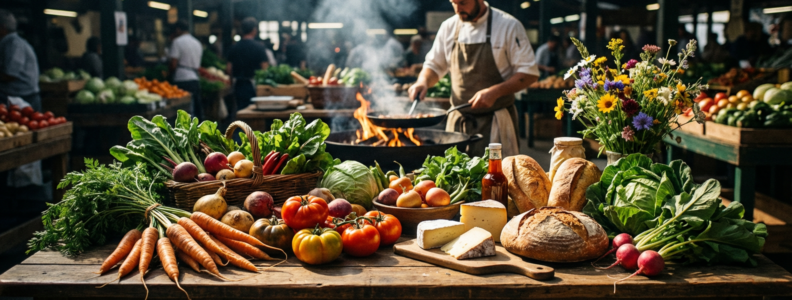
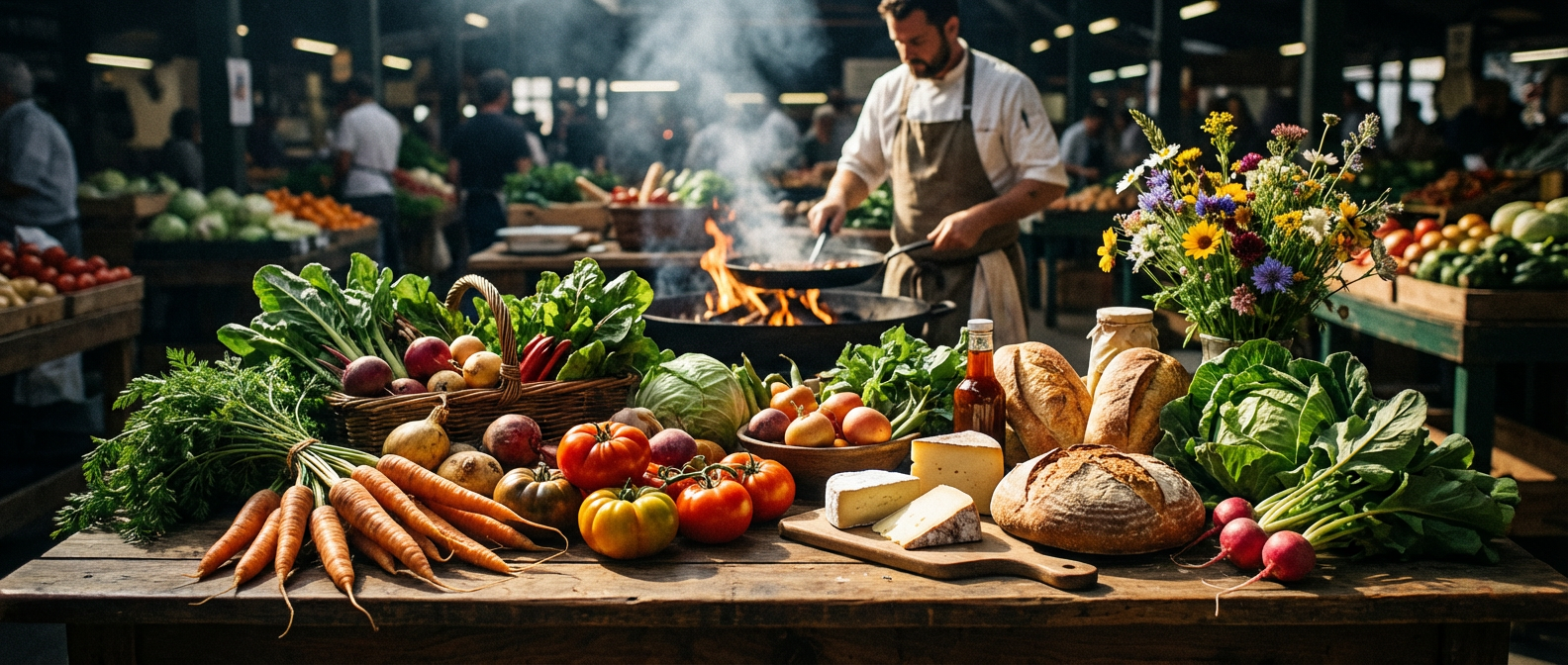
There’s something almost mystical about walking through a farmers market on a crisp October morning, watching vendors arrange their displays like artists preparing a gallery opening. The butternut squash sits heavy and golden, still wearing traces of field dust. The last defiant tomatoes of the season cluster together, their shoulders touching as if sharing secrets about summer’s final warmth. This isn’t just shopping. It’s attending a weekly seminar taught by the seasons themselves.

The Saturday Morning Pilgrimage: How Farmers Markets Reshape Your Kitchen Calendar

When you cook with the calendar instead of against it, your kitchen transforms from a place of obligation into a space of genuine discovery. That bag of knobbly turnips you bought because they looked like something from a fairy tale suddenly becomes the star of a soup that tastes like autumn distilled into liquid form. The farmer who grew them mentions they’re particularly sweet after the first frost. Suddenly you understand why your grandmother always waited until November to make her famous turnip gratin.

Seasonal cooking isn’t about restriction. It’s about alignment. When you work with what the earth is offering right now, everything becomes easier. The ingredients want to be cooked together. They’ve been growing in the same soil, under the same sky, developing flavors that complement rather than compete. That’s why a simple sauté of late summer peppers, onions, and tomatoes tastes like pure sunshine, while a winter stew of root vegetables and hardy greens feels like a warm embrace on a cold day.

Illustration for The Saturday Morning Pilgrimage: How Farmers Markets Reshape Your Kitchen Calendar

Reading the Market Like a Weather Map

Every farmers market tells the story of its place and time through the produce on display. In early spring, you’ll find the tender courage of new vegetables: peas still sweet from their vines, asparagus spears standing at attention, and baby lettuce leaves so delicate they seem to whisper rather than crunch. These are ingredients that ask for gentle treatment. Maybe a light steam or a quick sauté that barely disturbs their essential character.

Summer markets overflow with abundance that borders on the overwhelming. Tomatoes in seventeen varieties cascade across tables, each one demanding a different approach. The massive beefsteaks want to be sliced thick for sandwiches that drip down your chin. Cherry tomatoes beg to be popped whole into pasta at the last minute, their skins just beginning to blister and release their concentrated sweetness. And those perfectly round medium tomatoes, the ones that feel substantial in your palm? Those are destined for gazpacho or bruschetta where their balanced acidity can shine.

Come winter, the market takes on a more serious tone. Root vegetables hunker down in their bins like wise elders waiting to share their stored-up energy. Potatoes with names like German Butterball and Purple Majesty hint at the hearty meals they’ll anchor. Winter squash displays become geography lessons in comfort food, from the nutty sweetness of delicata to the rich, almost dessert-like flesh of kabocha. These vegetables have patience built into their very structure, ready to simmer slowly and transform tough fibers into silk.

The Art of the Seasonal Pivot

Learning to cook seasonally means developing a different kind of flexibility in the kitchen. Instead of planning meals around specific recipes, you begin to think in techniques and flavor profiles that can adapt to what’s available. That curry base you’ve perfected works just as beautifully with summer squash as it does with winter root vegetables. The technique stays the same, but the vegetables bring their own seasonal personality to the dish.

This approach means you need to build a pantry of versatile building blocks rather than collecting single-use ingredients that sit unused for months. A good olive oil, quality vinegar, dried spices that you refresh regularly, and a few reliable aromatics like onions, garlic, and ginger can transform any seasonal bounty into something memorable. When you have these foundations in place, that impulse purchase of unfamiliar greens or an interesting winter squash becomes an adventure rather than a source of anxiety.

The beauty lies in how this seasonal awareness begins to influence decisions far beyond the market. You start noticing when the light changes, when the air carries different scents. Your body begins to crave different flavors as the seasons shift. The heavy, warming spices that felt overwhelming in July suddenly seem exactly right when October arrives with its shorter days and longer shadows.

Building Relationships Beyond the Transaction

Maybe the most transformative aspect of farmers market shopping isn’t the produce itself but the conversations that come with it. When you ask a farmer about the best way to prepare their particular variety of beets, you’re not just getting cooking advice. You’re tapping into generations of agricultural wisdom. They’ll tell you that the greens are just as delicious as the roots, how their grandmother always pickled the stems, or why this variety holds its color better when roasted rather than boiled.

These conversations reshape how you think about ingredients. That bunch of carrots stops being a generic vegetable and becomes the Purple Haze variety that the farmer planted specifically because they hold their color when preserved, or the Nantes carrots that are so sweet they can be eaten like apples straight from the ground. When you understand the story behind your ingredients, cooking becomes an act of storytelling rather than just fuel preparation.

The vendors become your seasonal guides, alerting you when something special is coming into peak season or when the last of a beloved variety is about to disappear until next year. They’ll save you the perfect pumpkin for carving or set aside a bag of the final sweet corn before the first frost takes the stalks. These relationships create a rhythm to your year that connects you to the agricultural calendar in ways that supermarket shopping simply cannot match.

The Ripple Effects of Seasonal Awareness

Cooking seasonally changes more than just what appears on your dinner table. It develops a different kind of patience, one that understands anticipation as its own form of pleasure. The months of waiting for rhubarb make that first strawberry-rhubarb crisp of spring taste like pure celebration. The gradual transition from summer’s raw vegetables to autumn’s roasted roots mirrors the natural human inclination to seek comfort as the days grow shorter.

This approach also breeds a particular kind of creativity born from constraint. When you can’t rely on having strawberries in December or asparagus in August, you develop a deeper appreciation for what each season offers uniquely. You learn to preserve summer’s abundance in ways that honor rather than mask the original flavors. That jar of slowly caramelized onions made from the sweet onions of late summer becomes a treasure that brightens the depths of February.

The practice extends beyond the kitchen into a broader awareness of place and time. You begin to notice which farms grow what, how weather patterns affect different crops, and why certain combinations of vegetables appear together at specific times of year. This knowledge connects you to the land beneath your feet and the community of growers who tend it, creating a web of relationships that makes every meal feel like a small act of belonging.

What seasonal treasures are calling to you from your local market this week? I’d love to hear about your own farmers market discoveries and the dishes they’ve inspired in your kitchen. Sometimes the most ordinary ingredients, when met at their perfect moment, create the most extraordinary memories.