Author Archives: Myrtle Garcia

Why Your Summer Tomatoes Turn Mealy (And How Market Timing Fixes Everything)

The Cold Chain Conspiracy Against Perfect Tomatoes

I watched a vendor at Pike Place Market last week explain to a customer why his tomatoes cost three times more than the grocery store versions sitting pretty under fluorescent lights just blocks away. He picked up a Cherokee Purple, still warm from morning sun, and pressed it gently near the stem. “Feel that give,” he said. “That’s what happens when a tomato ripens on the vine instead of in a truck.” The science behind his words reveals why farmers market timing isn’t just about freshness. It’s about completely different cellular structures.

When tomatoes ripen naturally, enzymes called pectinases break down cell walls gradually, creating that perfect balance between firmness and juice-filled softness. But commercial tomatoes get picked green and gassed with ethylene to turn red during transport. This artificial ripening only affects color and some sugar development. The cell walls remain thick and woody, creating that disappointing mealy texture that makes you wonder why you bothered with the sandwich at all.

Here’s what changed my market shopping forever: I started timing my visits based on what had actually ripened that week, not what I wanted to cook. Last Saturday, the Hmong vendors had mountains of Asian eggplant that had reached peak tenderness. The skin so thin you could dent it with a fingernail. Two weeks earlier, those same plants were producing tough, seedy fruits that would have turned bitter no matter how I cooked them.

Reading Ripeness Like a Produce Whisperer

The best farmers become walking textbooks on plant biology, though they rarely call it that. Maria, who grows heirloom peppers in Skagit Valley, taught me to identify when capsaicin production peaks in hot peppers. “See how this habanero has those little brown lines near the stem?” she explained, holding up what looked like a perfectly orange pepper. “That’s when the plant stops sending energy to make it bigger and starts concentrating all the heat compounds. Wait one more week, and this pepper will make you cry happy tears.”

This timing knowledge translates directly to your kitchen techniques. Stone fruits like peaches and apricots stop producing sugars the moment they’re picked, but their starches continue converting to softer pectin compounds. That’s why a hard farmers market peach that smells intensely floral will become jammy and sweet on your counter, while a soft grocery store peach that smells like nothing will just get mushier without gaining flavor.

I learned to shop with my nose as much as my hands after watching an old Italian woman select melons at the University District market. She ignored color and firmness entirely, instead pressing her nose to the stem end of each cantaloupe. “The aromatic compounds that signal perfect ripeness are strongest where the fruit attached to the vine,” she told me in heavily accented English. “Your nose knows what your eyes miss.” She was right. Those volatile esters and terpenes that create melon fragrance only develop fully when the fruit matures on the plant.

The Maillard Reaction Meets Market Vegetables

Understanding how heat transforms fresh ingredients becomes crucial when you’re working with vegetables at their absolute peak. Last month, I brought home a bag of just-picked Brussels sprouts still on the stalk, something impossible to find in grocery stores where they’re always pre-trimmed and days old. The difference in cooking behavior was remarkable. Fresh sprouts contain higher levels of natural sugars and lower levels of the sulfur compounds that create bitterness when overcooked.

When I roasted these market-fresh sprouts at 425 degrees, the Maillard reaction (the chemical process that browns proteins and sugars) happened faster and more evenly than with older specimens. The outer leaves crisped into something resembling potato chips while the centers stayed creamy. This happens because fresh vegetables retain more moisture in their core while having less in their outer layers, creating ideal conditions for both browning and steaming simultaneously.

The same principle applies to alliums like the storage onions that appear at markets in late summer. These onions have been cured in fields for weeks, concentrating their sulfur compounds and reducing moisture content. When you caramelize them slowly, those concentrated sugars undergo complex chemical reactions that create dozens of flavor compounds. Some fruity, some nutty, some deeply savory. Try the same technique with grocery store onions that were harvested green and stored in refrigeration, and you’ll get pale, watery results that never achieve that deep amber complexity.

Seasonal Chemistry Changes Everything

The nutritional content and flavor chemistry of vegetables shifts dramatically throughout their growing season, something that becomes obvious when you shop markets regularly. Early summer squash blossoms contain different compounds than the squash themselves. They’re loaded with carotenoids but have almost no starch, making them perfect for light batters that won’t compete with their delicate, almost green-bean-like flavor.

But wait until late summer, and those same plants produce massive winter squash with concentrated starches and sugars that require completely different cooking approaches. The acorn squash I roasted in October had sugar levels comparable to sweet potatoes, while the summer squash from the same vendor in June was basically edible water with a mild vegetable flavor. Understanding this seasonal chemistry explains why your grandmother’s recipe for summer squash casserole calls for draining and salting. She was removing excess moisture that would make the dish soggy.

Root vegetables demonstrate this seasonal shift most dramatically. Carrots and beets harvested in spring taste sharp and grassy because they’re putting energy into leaf growth. The same varieties pulled from cold ground in late fall have converted most of their starches to sugars as natural antifreeze, making them incredibly sweet and dense. I’ve started planning my preserving and fermentation projects around these natural sugar peaks, knowing that October beets will pickle faster and more flavorfully than their June counterparts.

Building Flavor From Market Intelligence

The vendors themselves become your best teachers in understanding how to maximize what you bring home. David, who grows specialty greens in Woodinville, explained why he harvests his arugula before dawn during hot weeks. “Heat stress makes the plants pump out more glucosinolates, those compounds that make arugula peppery,” he said, handing me a bag of leaves that were substantially spicier than anything I’d tasted before. “Early morning harvesting catches them before the sun triggers even more defensive chemistry.”

This knowledge transforms how I think about building dishes. Instead of forcing ingredients into predetermined recipes, I let their seasonal characteristics guide technique choices. Those super-peppery summer greens work beautifully in warm salads where heat mellows their bite, while mild winter greens need aggressive acid or fat to wake up their subtle flavors. It’s like having a conversation with your ingredients instead of giving them orders.

Next time you’re wandering between market stalls, pay attention to which vendors can tell you not just what they’re selling, but when it was harvested and how that timing affects its cooking properties. These conversations reveal the invisible science happening inside every piece of produce. Understanding that science makes you a better cook than any recipe ever could.
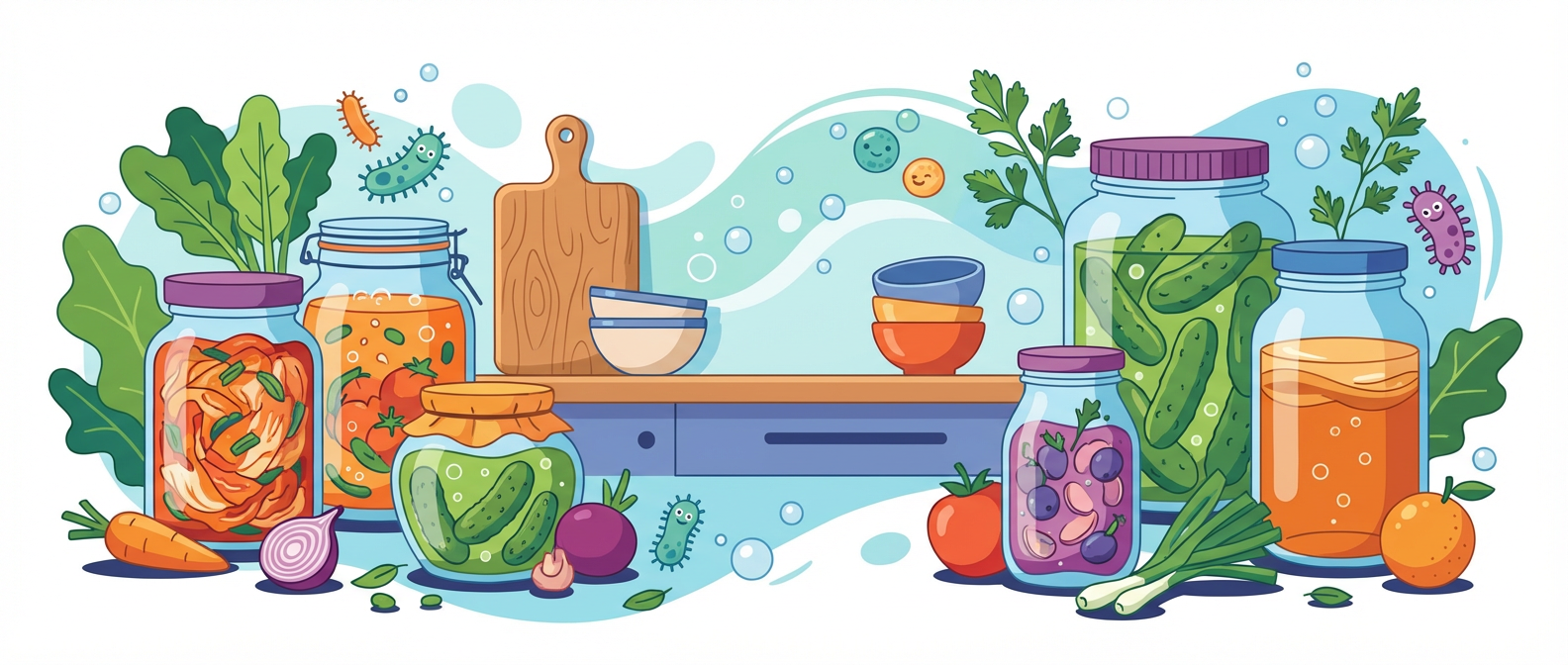
The Fermentation Fixes Your Recipes Actually Need

Why Your Sourdough Starter Isn’t the Problem

I’ve watched enough home cooks throw away perfectly good sourdough starters because they thought something was wrong, when really the issue was timing. Your starter isn’t broken just because it doesn’t double in four hours like that influencer promised. Temperature matters more than most recipes admit. A starter living in a 68-degree kitchen will take twice as long to peak as one sitting in a cozy 78-degree spot near your oven.

The Fermentation Fixes Your Recipes Actually Need

The real fix isn’t feeding schedules or fancy flours. It’s understanding that your starter is a living ecosystem, not a kitchen appliance. I keep mine at a 1:2:2 ratio during active baking weeks, but switch to 1:5:5 when life gets busy. This higher ratio means longer fermentation times, which actually develops more complex flavors. Your bread will thank you for the patience.

Stop discarding so much starter, too. Those recipes calling for massive amounts of discard assume you’re running a bakery, not feeding a family. I’ve tested this extensively: a healthy starter needs only 10-20 grams of seed to build a full culture for weekend baking. The rest becomes pancakes, crackers, or goes to friends who actually want to start their own fermentation journey.

Illustration for The Fermentation Fixes Your Recipes Actually Need

The Kimchi Temperature Truth Nobody Talks About

Most kimchi recipes fail because they ignore the fundamental relationship between salt, time, and temperature. I spent months perfecting my grandmother-in-law’s recipe, only to discover she was leaving out the most important detail: room temperature. What works in a Korean home where temperatures hover around 65 degrees creates a salty, under-fermented mess in my 72-degree kitchen.

The solution isn’t more salt or longer fermentation. It’s controlling where and how you ferment. I now start my kimchi at room temperature for exactly 18 hours, then move it to a 60-degree basement corner for the real magic. This two-stage approach gives you the initial lactic acid development you need, followed by the slow, complex fermentation that creates those deep, funky flavors.

Cabbage variety matters more than most recipes say. Napa cabbage from different seasons behaves completely differently. Summer cabbage holds more water and ferments faster. Winter cabbage is denser and needs extra time to break down. I adjust my salt ratios seasonally: 2.5% salt by weight in summer, 3% in winter. Your kimchi should taste slightly too salty before fermentation begins.

Kombucha Brewing Beyond the Basic SCOBY

The kombucha world is filled with mystical thinking about SCOBYs, but the real fermentation happens in the liquid, not the rubbery disk floating on top. I’ve brewed successful batches using just two tablespoons of mature kombucha as starter, no SCOBY required. The pellicle that forms is simply cellulose, a byproduct of fermentation, not the magical mother organism everyone thinks it is.

Temperature control transforms home kombucha from hit-or-miss to consistently excellent. I keep my brewing vessel between 75-85 degrees using a simple heating mat designed for seed starting. This range encourages the right balance between yeast and bacteria, preventing the overly sweet or overly sour results that plague most home brewers.

Second fermentation timing needs more precision than most recipes provide. I’ve tested dozens of combinations and found that fruit additions work best when added for exactly 48 hours at room temperature, then immediately refrigerated. Longer than that creates too much carbonation and risks bottle explosions. Shorter means flat, under-flavored kombucha. The sweet spot is narrow but completely reproducible once you understand the science.

Pickle Perfection Through Proper Brine Math

Quick pickle recipes drive me crazy because they treat salt like a seasoning instead of a preservation tool. The difference between a pickle that lasts two weeks and one that keeps for months is math, not magic. I use a consistent 3% salt brine by weight for all my fermented vegetables, adjusting only for specific vegetables that need special treatment.

Cucumber pickles fail most often because of improper preparation, not bad recipes. The cucumbers must be trimmed at both ends to remove enzymes that cause softening. I learned this from a Ukrainian neighbor who has been fermenting vegetables for sixty years. She also taught me to add a grape leaf or oak leaf to every jar. The tannins keep pickles crisp through months of fermentation.

Water quality affects fermentation more than any cookbook mentions. Chlorinated tap water kills the beneficial bacteria you’re trying to grow. I use filtered water for all my fermentation projects, but even letting tap water sit uncovered for 24 hours allows most chlorine to evaporate. This simple step has eliminated more fermentation failures than any other change I’ve made.

Building Your Personal Fermentation Laboratory

Successful home fermentation requires treating your kitchen like a laboratory, but not in an intimidating way. I keep a simple notebook tracking temperatures, timing, and results for every batch. This record-keeping revealed patterns I never would have noticed: my sauerkraut ferments faster near the refrigerator because of the motor’s warmth, and my miso develops better flavor in ceramic crocks than glass jars.

Equipment matters less than consistency. You don’t need expensive fermentation chambers or specialized crocks. I’ve had excellent results using repurposed yogurt containers, mason jars, and even large mixing bowls covered with kitchen towels. The key is maintaining consistent conditions and understanding how your specific environment affects fermentation.

Start building a culture library by saving small amounts of successful ferments as starters for future batches. I keep tablespoon-sized portions of my best sauerkraut juice, kimchi brine, and water kefir in the refrigerator. These starters dramatically reduce fermentation time and ensure consistent results. Think of them as your personal collection of beneficial bacteria, grown specifically for your kitchen’s conditions.

Have you been struggling with a particular fermentation project? I’d love to hear about your challenges and share what I’ve learned through years of trial and error. Sometimes the smallest adjustment makes the biggest difference, and there’s nothing quite like the satisfaction of finally nailing that recipe that’s been giving you trouble.

Why One Pot Meals Are the Real Test of Any Home Cook’s Soul

The Brutal Truth About Restaurant One Pot Dishes

Walk into any restaurant claiming to serve “authentic” one pot comfort food, and you’ll immediately know if they understand the assignment. The steam rising from a proper tagine should carry whispers of saffron and preserved lemons that make you close your eyes involuntarily. A real cassoulet arrives at your table with a crust so perfectly golden it crackles when your spoon breaks through, revealing beans that have absorbed every molecule of duck fat and herb-scented stock beneath.

Why One Pot Meals Are the Real Test of Any Home Cook's Soul
Why One Pot Meals Are the Real Test of Any Home Cook’s Soul

But here’s what most restaurants screw up completely: they treat one pot dishes like assembly line products instead of the slow symphonies they’re meant to be. I’ve sat through too many disappointing bowls of what passed for coq au vin, where the chicken had clearly been braised separately and dumped into wine-tinted gravy at the last minute. The vegetables were afterthoughts. The sauce had zero depth that comes from proper layering. The entire dish tasted like it had been invented by committee rather than born from necessity and love.

The service tells you everything before the first bite. Servers who can’t explain how their kitchen builds flavor in their braises, who don’t know whether the rice in their paella is bomba or arborio, who can’t tell you if the beans in their chili were soaked overnight. These are red flags bigger than a matador’s cape. Great one pot food requires understanding, patience, and respect for process. When restaurants shortcut these fundamentals, they’re not just serving bad food, they’re betraying centuries of careful tradition.

Illustration for Why One Pot Meals Are the Real Test of Any Home Cook's Soul
Illustration for Why One Pot Meals Are the Real Test of Any Home Cook’s Soul

What Our Grandmothers Actually Knew About Building Flavor

My grandmother never owned a cookbook, but she could transform three onions, a handful of spices, and whatever protein was on sale into something that would make you weep with gratitude. She understood what modern restaurants often forget: one pot cooking isn’t about convenience. It’s about creating an environment where flavors can marry, deepen, and become something entirely new through time and gentle heat.

The real magic happens in layers. First, you build your base, and I mean really build it. Those onions need to surrender their sharpness and turn golden, almost jammy, before anything else enters the pot. Your spices need a moment to bloom in hot oil, releasing their essential oils and becoming fragrant. This isn’t the time to rush. This is when you’re laying the foundation for everything that follows.

Then comes the understanding of liquid and time. Whether you’re making Vietnamese pho or Irish stew, the liquid isn’t just cooking medium. It’s becoming the soul of your dish. It carries flavors from ingredient to ingredient, breaking down tough fibers, concentrating essences, creating that unified taste that makes one pot meals so deeply satisfying. My grandmother’s curry pot simmered for hours, and by the time we ate, every grain of rice was perfumed with cardamom and turmeric, every piece of meat fell apart at the touch of a fork.

Why Most Home Cooks Give Up Too Soon

I watch friends attempt one pot meals and abandon them after a single disappointing attempt, usually because they’ve been seduced by promises of “30-minute dinners” and “dump and go” recipes. These approaches miss the fundamental point: good one pot food requires patience, not speed. You can’t rush the breakdown of collagen in tough cuts of meat. You can’t force dried beans to become creamy and tender. You can’t create depth of flavor without giving ingredients time to transform.

The other fatal mistake is treating the pot like a mixing bowl. Real one pot cooking is about sequence and timing. Your aromatics go in first, then your proteins that need the longest cooking, then your vegetables in order of how long they need to become tender. Root vegetables before delicate greens. Dried herbs early, fresh herbs at the very end. Rice or pasta when there’s enough liquid left to cook them properly without turning them to mush.

Most home cooks also underestimate the importance of tasting and adjusting throughout the process. This isn’t set-it-and-forget-it cooking. Your pot needs attention, love, the occasional stir, and constant evaluation. Does it need more salt? More acid? More time? The dish tells you what it needs if you’re paying attention.

The Equipment Truth Nobody Talks About

Let’s address the elephant in the kitchen: your pot matters enormously. That thin-bottomed vessel you got as a wedding gift twenty years ago isn’t doing you any favors. It creates hot spots that burn your aromatics before they can develop properly. It doesn’t retain heat evenly, leading to uneven cooking and frustration.

Invest in one excellent heavy-bottomed pot. Enameled cast iron, thick stainless steel, or traditional cast iron if you’re comfortable with the maintenance. The weight isn’t just about durability, it’s about heat distribution and retention. A proper pot holds steady temperatures, preventing the scorching that ruins so many one pot attempts.

Size matters too. Too small, and you’re overcrowding ingredients, steaming instead of browning, creating watery disappointing results. Too large, and your liquids evaporate too quickly, leaving you with burnt bits and dried-out proteins. For most family-sized portions, a 6-8 quart capacity hits the sweet spot.

The Real Comfort Lives in the Process

Here’s what restaurants selling “comfort food” often miss entirely: the comfort isn’t just in the eating. It’s in the making. The meditative rhythm of chopping vegetables, the satisfaction of watching onions slowly surrender to golden sweetness, the way your kitchen fills with layers of aroma as your dish builds complexity. This is where the real nourishment begins.

One pot meals connect us to something primal and essential. They’re the foods that sustained families through hard times, that stretched ingredients to feed unexpected guests, that transformed humble components into something greater than their parts. When you make a proper pot of beans or a real risotto, you’re participating in traditions that span continents and centuries.

The best one pot meals I’ve ever eaten, whether at a tiny family restaurant in Lyon or my friend’s kitchen table, shared certain qualities: they were made with attention, seasoned with confidence, and served with the understanding that good food takes time. They weren’t Instagram-ready the moment they came off the stove, but they were deeply, completely satisfying in ways that transcend photography.

What’s your relationship with one pot cooking? Are you rushing through recipes, or are you taking time to really understand how flavors develop and marry? I’d love to hear about your successes and disasters because both teach us something valuable about the patient art of building flavor, layer by careful layer.

The Tools That Dance With the Seasons: What Really Matters in Your Kitchen

The Weight of a Good Knife in October Hands

There’s something almost ceremonial about the way my grandmother’s carbon steel knife moves through a butternut squash on the first cool morning of autumn. The blade, darkened with age and countless meals, seems to understand the density of winter vegetables in a way that newer knives never quite grasp. This isn’t about romance or nostalgia. It’s about the fundamental truth that good tools become extensions of our hands, and our hands need to navigate the changing demands of each season.

The Tools That Dance With the Seasons: What Really Matters in Your Kitchen

A really sharp knife doesn’t just cut through summer’s tender tomatoes or spring’s delicate herbs. It respects the hard rinds of winter squash, the fibrous stems of collard greens, the dense flesh of root vegetables that have been storing their sweetness underground all season long. When you invest in a knife that holds its edge and feels balanced in your palm, you’re not buying a tool. You’re choosing a partner for every seasonal transition your kitchen will witness.

The difference becomes clear when you’re breaking down a whole chicken in December versus filleting the first spring salmon. The same blade moves with different intentions, different pressures, different respect for what lies beneath its edge. This is why the knife matters more than any gadget ever could.

Illustration for The Tools That Dance With the Seasons: What Really Matters in Your Kitchen

Cast Iron: The Memory Keeper of Seasonal Flavors

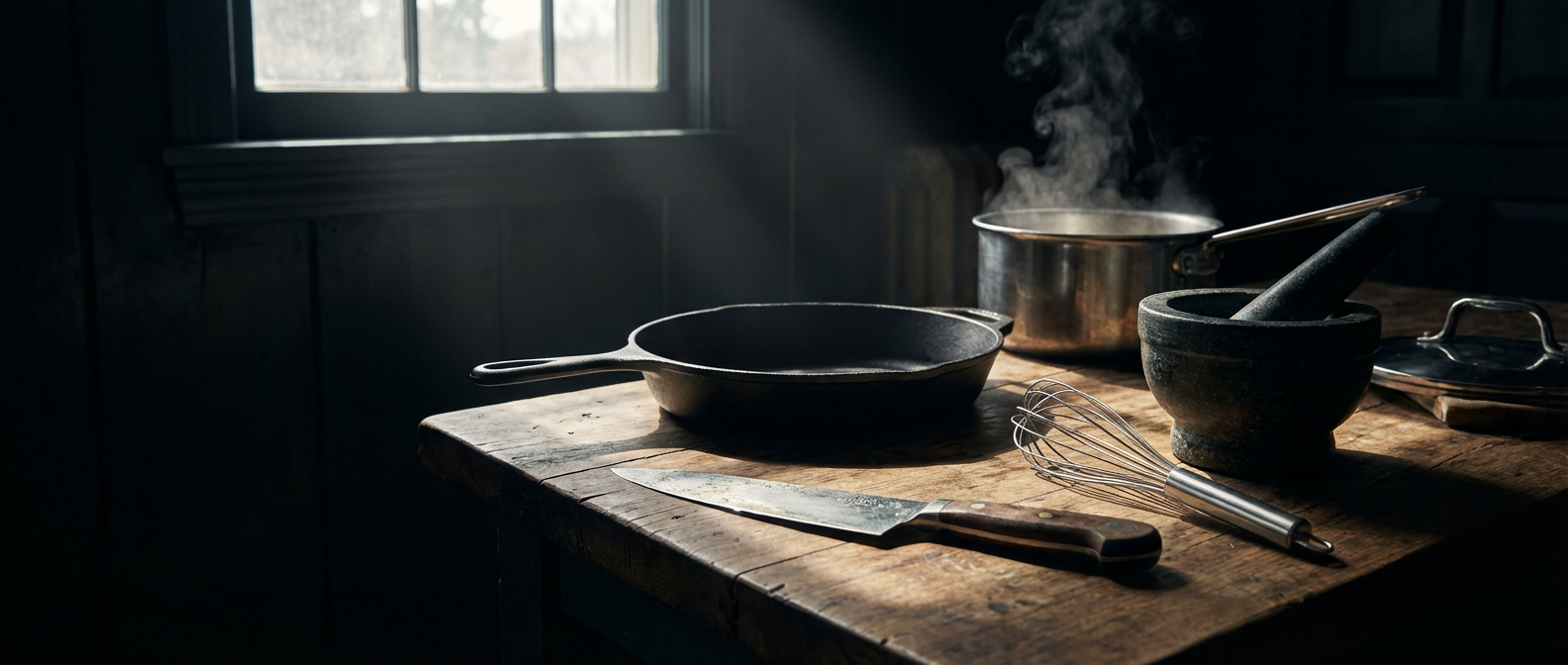
My cast iron skillet remembers every summer corn kernel that has ever hit its surface, every fall apple that has caramelized in its depths, every winter stew that has bubbled slowly on Sunday afternoons. Cast iron doesn’t just cook food. It builds up layers of flavor that synthetic surfaces can never replicate.

In spring, when the first asparagus appears at the farmers market, that skillet transforms those tender spears with heat that’s even and patient. Come summer, it chars peppers and blisters tomatoes with the kind of high heat that brings out their essential sweetness. But it’s in autumn and winter that cast iron really shows its worth, moving effortlessly from stovetop to oven, creating the kind of deep, complex flavors that only develop when ingredients are given time and consistent heat.

The beauty of cast iron lies in how it adapts to each season. It holds heat like a promise, distributing it evenly whether you’re searing Brussels sprouts fresh from the October garden or slow-cooking a January pot roast. Unlike other materials that respond frantically to temperature changes, cast iron remains steady, dependable, grounded in the rhythm of slow cooking that mirrors the natural pace of seasonal eating.

The Mortar and Pestle: Awakening Seeds and Spices

Every spice tells a story of seasons, and a good mortar and pestle helps those stories unfold in your kitchen. When you crack coriander seeds that were harvested in late summer, their citrusy brightness speaks of long, warm days. When you grind cardamom pods that traveled halfway around the world to reach your December baking, their complex warmth carries the promise of celebration and comfort.

The granite surface of my mortar, worn smooth by years of grinding, releases essential oils in a way that electric spice grinders simply cannot match. The slow, circular motion doesn’t just break down seeds and dried herbs. It awakens them, releasing aromatic compounds that have been sleeping since harvest. This matters especially when working with seasonal spices, when you want to honor the timing of their peak flavors.

In spring, I grind fresh herbs with coarse sea salt, creating pastes that capture the bright green essence of the season. Summer brings dry rubs for grilling, where cumin and fennel seeds release their earthiness under pressure. Fall and winter call for warming spice blends, where whole cloves and star anise surrender their concentrated heat slowly, deliberately, building layers of flavor that commercial pre-ground spices could never achieve.

The rhythm of grinding spices connects you to the seasonal nature of flavor in a way that pressing a button never could. It slows you down, makes you present, reminds you that the best flavors develop with attention and intention.

Wooden Spoons: The Gentle Guardians of Seasonal Cooking

There’s a reason why wooden spoons have survived every kitchen trend and technological innovation. They understand the delicate nature of seasonal cooking in ways that metal utensils never will. When you’re stirring early summer berries into a compote, wood won’t break their tender skins. When you’re folding flour into autumn apple cake batter, wood moves through the mixture with the gentle touch that prevents tough, overworked results.

Each wooden spoon in my kitchen has its own personality, shaped by the specific tasks it has performed over the years. The wide, flat paddle remembers countless batches of seasonal preserves, its surface slightly stained with the ghosts of strawberry jams and peach butters. The slender spoon with the pointed tip navigates around the edges of pots where winter sauces might stick, its narrow profile perfect for tasting and adjusting flavors as they develop.

Wood doesn’t conduct heat, which means your hand stays comfortable even when stirring something that has been simmering for hours. This matters more than you might think when you’re making the kind of slow, seasonal dishes that require frequent tasting and adjustment. A wooden spoon won’t scratch the seasoned surface of your cast iron or damage the coating of your favorite pot. It moves through food with respect, understanding that some ingredients need a gentle touch to reveal their best qualities.

The Scale: Honoring the True Weight of Seasonal Ingredients

Baking with seasonal ingredients requires a different kind of precision than following standard recipes year-round. Summer peaches carry different amounts of moisture than their winter counterparts. Fresh herbs have different concentrations of oils than dried ones. A kitchen scale doesn’t just measure ingredients. It helps you honor the natural variations that make seasonal cooking both challenging and deeply satisfying.

When you measure flour by weight rather than volume, you account for humidity changes that affect how flour settles in its container. When you weigh fresh berries for a summer tart, you ensure that the delicate balance between fruit and pastry remains consistent, regardless of whether your strawberries are the small, intensely flavored varieties of early summer or the larger, juicier ones that appear later in the season.

The scale also encourages you to think about ingredients in terms of ratios rather than rigid measurements. This flexibility becomes essential when you’re cooking with what’s available, when the farmers market doesn’t have exactly the amount of something you planned for, when you need to adapt recipes to match the natural abundance or scarcity of seasonal ingredients.

These tools, worn smooth by countless meals and seasons, transform ordinary ingredients into extraordinary experiences. They don’t just make cooking easier. They make it more connected to the natural rhythm of the year, more respectful of the ingredients themselves, more grounded in the timeless practices that have fed families for generations. What tools have become essential partners in your own seasonal kitchen adventures?

The Patient Art of Fermentation: How Ancient Wisdom Meets Your Modern Kitchen

When Winter Calls for Ancient Alchemy

There’s something deeply satisfying about standing in your kitchen on a cold February morning, opening a jar of sauerkraut that you started when the last cabbage came in from the garden three months ago. The sharp, tangy aroma rises up to meet you, and suddenly you understand what your great-grandmother knew intuitively: fermentation isn’t just food preservation, it’s a conversation between you and time itself.

The Patient Art of Fermentation: How Ancient Wisdom Meets Your Modern Kitchen

I’ve been fermenting foods for over a decade now. Each season brings its own invitation to transform fresh abundance into something entirely new. Spring calls for wild garlic scapes bubbling away in salt brine. Summer demands quick cucumber pickles that capture those fleeting garden moments. Fall whispers of apple cider vinegar started from the first windfall fruits. But winter? This is when fermentation truly shows off.

The beauty of fermentation isn’t found in complicated techniques or expensive equipment. It’s about understanding the rhythm of seasons and the patient wisdom of beneficial bacteria. When you work with what’s naturally abundant around you, something remarkable happens: your pantry becomes a living library of preserved seasons, each jar telling the story of a particular moment in your local food world.

Illustration for The Patient Art of Fermentation: How Ancient Wisdom Meets Your Modern Kitchen

Reading the Calendar Like a Recipe

Every month has its own fermentation opportunities, if you know how to look. Right now, as we move through the lean months, root vegetables become your closest allies. Those sturdy winter beets, turnips, and carrots that might seem boring fresh? They transform into entirely different creatures when given time and salt.

I learned this lesson from my neighbor Elena, whose grandmother emigrated from Poland with nothing but a few precious family recipes in her memory. Elena taught me to make winter beet kvass, a deep ruby drink that starts with three simple ingredients: beets, salt, and water. After two weeks of patient waiting, those humble roots become a probiotic powerhouse with an earthy complexity that no store-bought juice could ever match.

The secret isn’t in forcing exotic flavors or following complicated formulas. It’s about recognizing what your environment offers and working with those ingredients when they’re at their peak. Late winter brings us stored apples that are past their crisp prime but perfect for starting wild fermented apple cider vinegar. Early spring offers tender dandelion greens that ferment beautifully with just a touch of sea salt and become a bitter tonic that helps wake up your digestive system after winter’s heavier foods.

This seasonal approach to fermentation connects you to place in a way that buying ingredients from across the globe simply cannot. When you ferment what grows nearby, you’re not just making food. You’re participating in an ancient dialogue between land and table that has sustained communities for thousands of years.

The Science Behind the Magic

Understanding what happens during fermentation transforms you from a nervous beginner into a confident collaborator with beneficial microbes. At its heart, fermentation is controlled decomposition. Beneficial bacteria and yeasts consume sugars in your vegetables and fruits, producing lactic acid, alcohol, or acetic acid depending on the type of fermentation you’re encouraging.

Salt plays the key role of creating an environment where good bacteria can thrive while harmful microbes cannot. When you massage coarse sea salt into shredded cabbage for sauerkraut, you’re not just seasoning. You’re creating the perfect conditions for Lactobacillus bacteria to begin their work. These beneficial microbes naturally live on the surface of fresh vegetables, waiting for the right conditions to multiply and transform your ingredients.

Temperature matters enormously, which is why seasonal fermentation makes such perfect sense. Cool winter temperatures slow fermentation, allowing complex flavors to develop gradually over weeks or even months. Warm summer temperatures speed the process, perfect for quick pickles and refreshing fermented beverages that you’ll want to enjoy immediately.

The most important thing to understand is that you don’t need to sterilize everything or create laboratory conditions. Fermentation thrives in the same clean-but-not-sterile environment where you prepare regular meals. Trust your senses: properly fermenting vegetables smell tangy and appealing, never rotten or offensive. The surface might develop a thin white film called kahm yeast, which is harmless and can simply be skimmed off.

Starting Your Fermentation Practice

Begin with what’s abundant and affordable right now. If winter root vegetables fill your local market, start with a simple mixed vegetable ferment. Shred equal parts turnips, carrots, and cabbage. Massage with coarse salt until the vegetables release their juices, then pack everything into a clean glass jar, making sure the vegetables stay submerged under their own brine.

Your kitchen already has most of what you need: glass jars, sea salt, and fresh vegetables. Skip specialized fermenting lids initially and simply use a regular canning jar lid loosely screwed on, or cover your jar with a clean cloth secured with a rubber band. The key is allowing gases to escape while keeping dust and insects out.

Start small with single-vegetable ferments to understand how different ingredients behave. Radishes become surprisingly mellow and develop an almost meaty texture. Beets turn sweet and earthy. Carrots maintain their crunch while developing a complex tanginess that makes them irresistible straight from the jar.

Keep your first ferments somewhere you’ll notice them daily. I keep mine on the kitchen counter where I can observe the gentle bubbling that means active fermentation is happening. Taste them every few days, starting after the third day. You’ll quickly learn to recognize the progression from fresh and salty to tangy and complex to fully fermented and ready for cold storage.

Building Confidence Through Practice

The most transformative moment in any fermenter’s journey comes when you realize that these ancient processes are far more forgiving than modern cooking methods. You cannot burn fermented vegetables. You cannot overcook them. Time and beneficial bacteria do the work while you go about your daily life.

Each successful batch builds your confidence and deepens your understanding of how different vegetables respond to fermentation. You’ll start noticing subtle changes: how humidity affects fermentation speed, how different salt types influence flavor development, how the age of your vegetables impacts the final texture.

Soon you’ll find yourself thinking like a fermenter, seeing potential in everything. Those slightly wilted greens become perfect candidates for quick salt-massaged ferments. Overripe tomatoes transform into complex fermented salsa. Even fruit past its prime finds new life as naturally fermented sodas or vinegars.

The rhythm of checking your ferments becomes as natural as making morning coffee. You’ll develop an intuitive sense of timing, recognizing when vegetables have reached that perfect balance of tang and crunch that makes fermented foods so addictive.

I’d love to hear about your first fermentation experiments. What seasonal ingredients are calling to you right now? Share your questions and discoveries in the comments below, because the best part of this ancient practice is building community around the simple magic of transformed vegetables.