
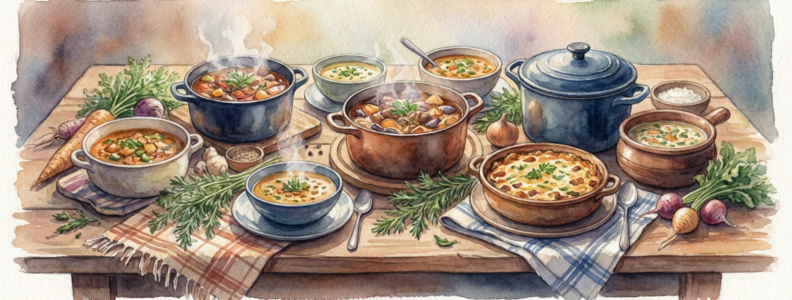
The Brutal Truth About Restaurant One Pot Dishes
Walk into any restaurant claiming to serve “authentic” one pot comfort food, and you’ll immediately know if they understand the assignment. The steam rising from a proper tagine should carry whispers of saffron and preserved lemons that make you close your eyes involuntarily. A real cassoulet arrives at your table with a crust so perfectly golden it crackles when your spoon breaks through, revealing beans that have absorbed every molecule of duck fat and herb-scented stock beneath.

But here’s what most restaurants screw up completely: they treat one pot dishes like assembly line products instead of the slow symphonies they’re meant to be. I’ve sat through too many disappointing bowls of what passed for coq au vin, where the chicken had clearly been braised separately and dumped into wine-tinted gravy at the last minute. The vegetables were afterthoughts. The sauce had zero depth that comes from proper layering. The entire dish tasted like it had been invented by committee rather than born from necessity and love.
The service tells you everything before the first bite. Servers who can’t explain how their kitchen builds flavor in their braises, who don’t know whether the rice in their paella is bomba or arborio, who can’t tell you if the beans in their chili were soaked overnight. These are red flags bigger than a matador’s cape. Great one pot food requires understanding, patience, and respect for process. When restaurants shortcut these fundamentals, they’re not just serving bad food, they’re betraying centuries of careful tradition.

What Our Grandmothers Actually Knew About Building Flavor
My grandmother never owned a cookbook, but she could transform three onions, a handful of spices, and whatever protein was on sale into something that would make you weep with gratitude. She understood what modern restaurants often forget: one pot cooking isn’t about convenience. It’s about creating an environment where flavors can marry, deepen, and become something entirely new through time and gentle heat.
The real magic happens in layers. First, you build your base, and I mean really build it. Those onions need to surrender their sharpness and turn golden, almost jammy, before anything else enters the pot. Your spices need a moment to bloom in hot oil, releasing their essential oils and becoming fragrant. This isn’t the time to rush. This is when you’re laying the foundation for everything that follows.
Then comes the understanding of liquid and time. Whether you’re making Vietnamese pho or Irish stew, the liquid isn’t just cooking medium. It’s becoming the soul of your dish. It carries flavors from ingredient to ingredient, breaking down tough fibers, concentrating essences, creating that unified taste that makes one pot meals so deeply satisfying. My grandmother’s curry pot simmered for hours, and by the time we ate, every grain of rice was perfumed with cardamom and turmeric, every piece of meat fell apart at the touch of a fork.
Why Most Home Cooks Give Up Too Soon
I watch friends attempt one pot meals and abandon them after a single disappointing attempt, usually because they’ve been seduced by promises of “30-minute dinners” and “dump and go” recipes. These approaches miss the fundamental point: good one pot food requires patience, not speed. You can’t rush the breakdown of collagen in tough cuts of meat. You can’t force dried beans to become creamy and tender. You can’t create depth of flavor without giving ingredients time to transform.
The other fatal mistake is treating the pot like a mixing bowl. Real one pot cooking is about sequence and timing. Your aromatics go in first, then your proteins that need the longest cooking, then your vegetables in order of how long they need to become tender. Root vegetables before delicate greens. Dried herbs early, fresh herbs at the very end. Rice or pasta when there’s enough liquid left to cook them properly without turning them to mush.
Most home cooks also underestimate the importance of tasting and adjusting throughout the process. This isn’t set-it-and-forget-it cooking. Your pot needs attention, love, the occasional stir, and constant evaluation. Does it need more salt? More acid? More time? The dish tells you what it needs if you’re paying attention.
The Equipment Truth Nobody Talks About
Let’s address the elephant in the kitchen: your pot matters enormously. That thin-bottomed vessel you got as a wedding gift twenty years ago isn’t doing you any favors. It creates hot spots that burn your aromatics before they can develop properly. It doesn’t retain heat evenly, leading to uneven cooking and frustration.
Invest in one excellent heavy-bottomed pot. Enameled cast iron, thick stainless steel, or traditional cast iron if you’re comfortable with the maintenance. The weight isn’t just about durability, it’s about heat distribution and retention. A proper pot holds steady temperatures, preventing the scorching that ruins so many one pot attempts.
Size matters too. Too small, and you’re overcrowding ingredients, steaming instead of browning, creating watery disappointing results. Too large, and your liquids evaporate too quickly, leaving you with burnt bits and dried-out proteins. For most family-sized portions, a 6-8 quart capacity hits the sweet spot.
The Real Comfort Lives in the Process
Here’s what restaurants selling “comfort food” often miss entirely: the comfort isn’t just in the eating. It’s in the making. The meditative rhythm of chopping vegetables, the satisfaction of watching onions slowly surrender to golden sweetness, the way your kitchen fills with layers of aroma as your dish builds complexity. This is where the real nourishment begins.
One pot meals connect us to something primal and essential. They’re the foods that sustained families through hard times, that stretched ingredients to feed unexpected guests, that transformed humble components into something greater than their parts. When you make a proper pot of beans or a real risotto, you’re participating in traditions that span continents and centuries.
The best one pot meals I’ve ever eaten, whether at a tiny family restaurant in Lyon or my friend’s kitchen table, shared certain qualities: they were made with attention, seasoned with confidence, and served with the understanding that good food takes time. They weren’t Instagram-ready the moment they came off the stove, but they were deeply, completely satisfying in ways that transcend photography.
What’s your relationship with one pot cooking? Are you rushing through recipes, or are you taking time to really understand how flavors develop and marry? I’d love to hear about your successes and disasters because both teach us something valuable about the patient art of building flavor, layer by careful layer.