
Author Archives: Myrtle Garcia

Beyond the Hype: Why Plant-Based Eating Is Finally Growing Up

The Correction We Needed

Remember when every grocery store seemed to suddenly stock seventeen brands of plant-based meat alternatives? When venture capital was flowing like water and everyone was convinced that perfectly engineered burger patties would revolutionize how we eat? I do. I watched it happen with genuine curiosity, bought a few products to test them in my kitchen, and honestly, most of them sat in my fridge while I reached for something else.

Beyond the Hype: Why Plant-Based Eating Is Finally Growing Up

Here’s what’s interesting now: the brands that promised to change everything are experiencing real revenue declines. Beyond Meat, Impossible Foods, and similar companies that captured our collective imagination a few years ago are no longer growing at the rates that made headlines. But before you assume this means plant-based eating is fading away, let me tell you what’s actually happening. The movement isn’t declining. It’s maturing. It’s becoming something quieter, more sustainable, and honestly, much more delicious.
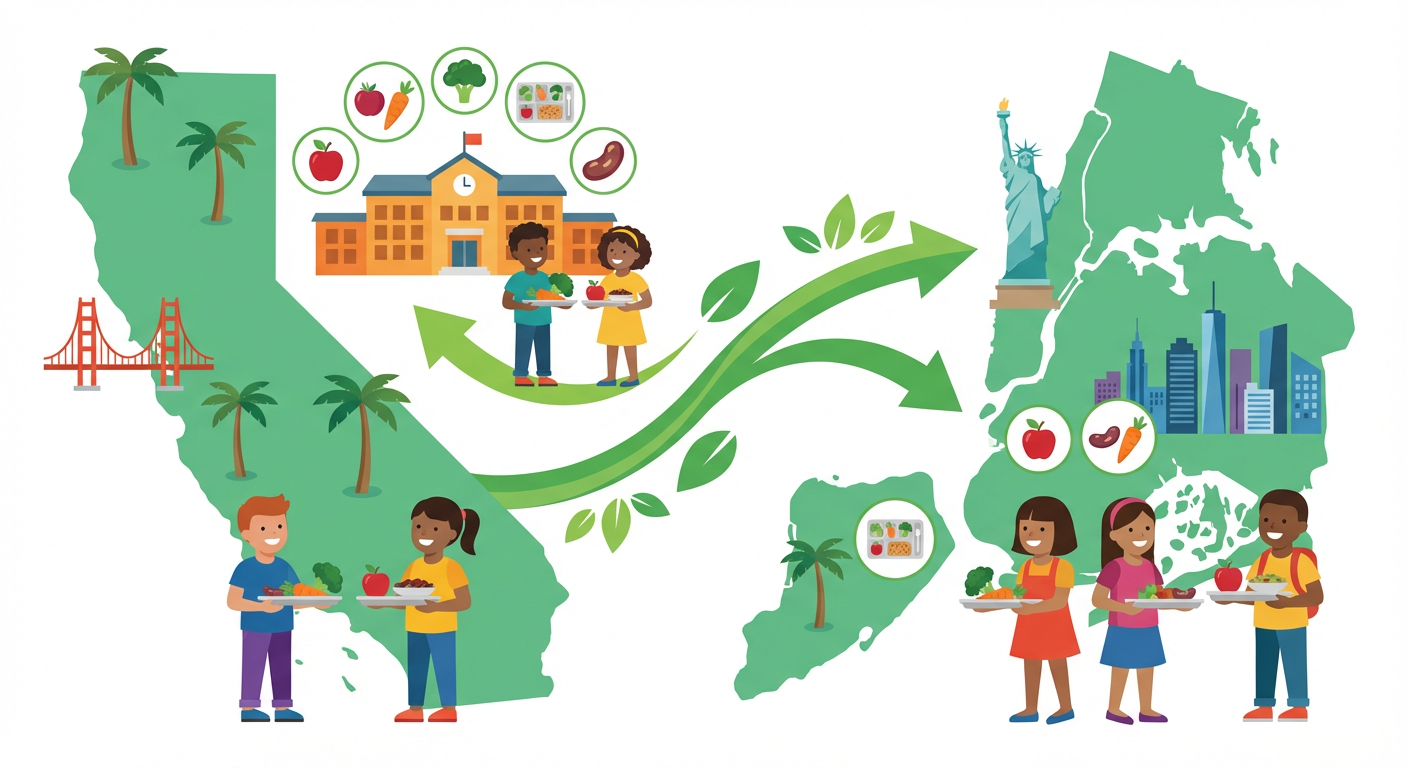
Illustration for Beyond the Hype: Why Plant-Based Eating Is Finally Growing Up

The Difference Between Trend and Transformation

The ultra-processed meat alternatives are plateauing, but something far more interesting is growing underneath. Whole food plant-based cooking is becoming the dominant force. Tempeh, legumes, properly prepared jackfruit, and simple ingredients that humans have eaten for centuries are replacing those engineered products on restaurant menus and home dinner tables. The restaurants I visit aren’t featuring clever plant-based bacon anymore. They’re featuring chef-driven dishes built around beans, grains, and vegetables that taste like someone actually thought about flavor.

I’ve spent the last few years testing both approaches side by side. A box of ultra-processed plant-based nuggets costs roughly seven to nine dollars and tastes like you’re eating packaging. A pound of good dried beans costs less than two dollars and, when properly seasoned and combined with fresh vegetables, will feed four people something genuinely nourishing. The math is becoming clear to home cooks everywhere.

According to Good Food Institute research, this shift reflects something important: people aren’t abandoning the idea of eating less animal products. They’re abandoning the idea that it requires expensive substitutes. The largest dietary group in the United States now identifies as flexitarian, representing 36 percent of the population. These are people who don’t make a binary choice between vegetarian and omnivore. They simply eat less meat and more plants, using wisdom that our grandmothers understood intuitively.

What’s Actually Affordable and Worth Your Money

Let me be specific about value because I know food budgets matter. I’m going to give you the real costs based on what I buy at my regular grocery store, not specialty shops.

A can of chickpeas costs about sixty cents. That same can, if it were a plant-based product designed to taste like chicken, would cost four to six dollars. When I prepare those chickpeas with spices, roast them until they’re crispy, and toss them with fresh greens and a simple dressing, I’ve made something my family actually requests. When I make a lentil curry using a technique my neighbor shared from her family traditions, people at my table stop talking to concentrate on eating. The cost difference is enormous, but the satisfaction gap is even bigger.

Fine dining restaurants have figured this out already. They’re moving away from meat analogues toward what they always should have been doing: celebrating plants as themselves. A restaurant featuring roasted cauliflower with pomegranate and tahini isn’t trying to convince you it’s steak. It’s inviting you to taste what cauliflower actually is when someone who knows what they’re doing prepares it with intention.

There’s also a quiet revolution happening with precision fermentation technology. This allows food scientists to create dairy proteins without cows, competing on actual cost with conventional products. Food Navigator plant-based coverage has documented how this technology is finally making plant-based cheese and milk products that are economically competitive without sacrificing quality. This is different from the meat analogue story because the technology is actually working, and prices are dropping in a meaningful way.

Where Plant-Based Is Actually Winning

I find it encouraging that school lunch programs across California and New York are significantly expanding plant-based options. This isn’t about ideology. It’s about feeding growing children nutritious food at scale while managing costs. When institutional kitchens commit to plant-based cooking, they’re not serving endless veggie burgers. They’re building menus around beans, grains, vegetables, and basic culinary technique. Children who grow up eating this way, who understand that a lentil soup or grain bowl can be delicious, are developing eating patterns that will serve them well.

What strikes me most is how ordinary this is becoming. Plant-based eating isn’t a special category anymore. It’s just how more and more people eat, some of the time or all of the time. My neighbor who eats meat three nights a week and beans the other four isn’t making a statement. She’s making dinner. She’s noticed that her grocery bill is lower, her family feels better, and she enjoys the variety.

Building Your Own Plant-Based Kitchen

If you’re interested in exploring this for yourself, forget about the products designed to replicate something else. Start with what you actually like to eat. Do you enjoy Indian food? Cook dal. Do you love Mexican food? Make proper beans with aromatics and spices. Are you drawn to Mediterranean flavors? Build meals around legumes, olive oil, and fresh vegetables. Your kitchen will smell better, your meals will taste better, and your wallet will thank you.

The plant-based food movement has matured past the hype. It’s no longer about convincing anyone of anything. It’s just become the practical choice that more people are making because it works. The real action isn’t happening in food labs anymore. It’s happening in home kitchens and restaurant dining rooms where people are discovering that food tastes best when it’s made from real ingredients and prepared with care.

I’d love to hear what plant-based dishes have surprised you with their actual deliciousness. What’s something you thought you’d hate but ended up enjoying? Tell me in the comments, and maybe I’ll feature it in a future dinner party.
Why Every Serious Home Cook Is Finally Switching to Carbon Steel (And What the Restaurant Industry Knew for Decades)

The Restaurant Secret That Stayed Secret for Too Long

Walk into any professional kitchen in France, and you will not find a collection of shiny stainless steel pans sitting in some glamorous rack. You will find carbon steel. Worn, seasoned, darker than cast iron, and moving across burners with a speed and responsiveness that makes cooking feel less like a chore and more like a conversation between your hand and the heat. Professional chefs have known this for generations. They chose carbon steel not because it looks pretty in a photo, but because it performs. It forgives. It rewards technique without demanding the obsessive maintenance that cast iron requires or the sluggish heat response that stainless steel delivers.

Why Every Serious Home Cook Is Finally Switching to Carbon Steel (And What the Restaurant Industry Knew for Decades)

What’s remarkable is how long this knowledge stayed locked behind kitchen doors. Home cooks spent decades either struggling with temperamental cast iron or convincing themselves that nonstick was good enough. We accepted that cooking well required either patience or compromise. The restaurant industry never had to make that choice because they understood something fundamental: the right tool changes everything.

Why Carbon Steel Is Having Its Moment Right Now

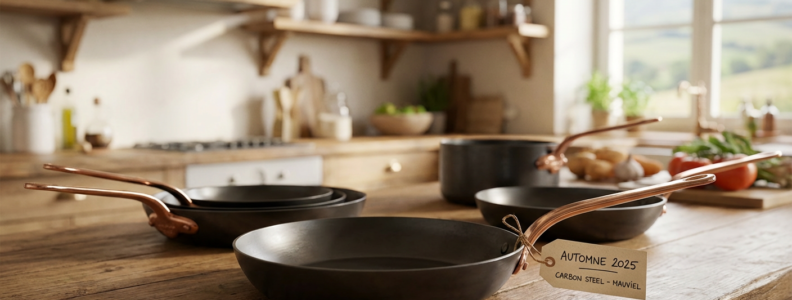
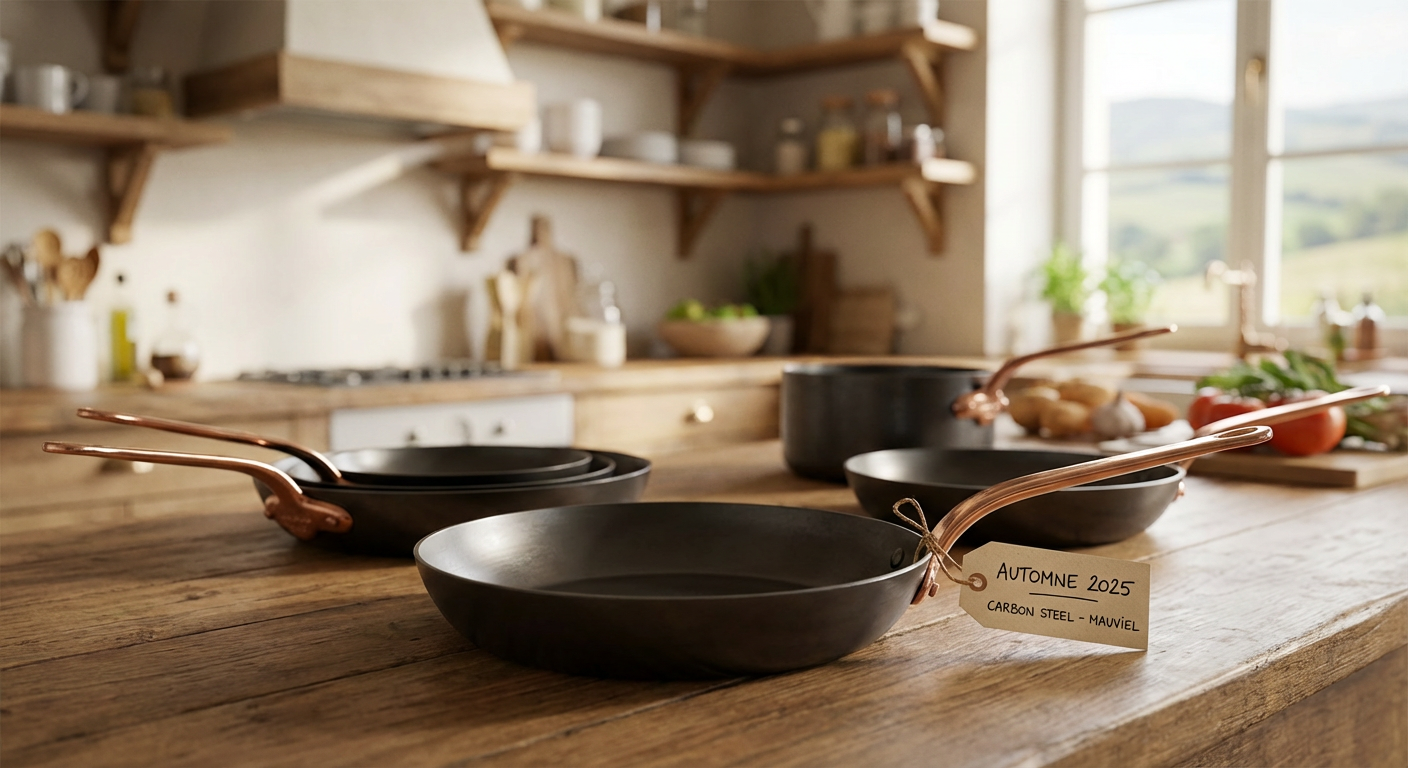
The numbers are worth paying attention to. Sales of carbon steel cookware jumped 34 percent year over year in 2025, finally outpacing cast iron for the first time. This is not a trend that will fade quietly. This is what happens when a genuinely superior product becomes accessible. When De Buyer, the French manufacturer that has been crafting copper cookware since 1830, launched their first direct-to-consumer carbon steel line in the American market this past September, they were not taking a gamble. They were responding to something real. Professional kitchens have already voted. De Buyer Mineral B Pro Cookware appears in over 60 percent of French Michelin-starred kitchens according to a Le Cordon Bleu Paris survey from 2024. That is not coincidence. That is evidence.

Even more telling is what happened when America’s Test Kitchen conducted blind cooking trials in 2025. They ranked carbon steel above both stainless steel and cast iron for searing proteins. Above both. This matters because searing is fundamental. It is where technique meets physics, where the quality of your equipment determines whether you get a proper crust or just move food around in a pan. When a rigorous testing organization puts carbon steel at the top, they are not following fashion. They are reporting what works.

The Physics That Makes Carbon Steel Superior

Here is what separates carbon steel from everything else sitting on a store shelf: it is remarkably light while remaining brutally capable. A carbon steel skillet weighs roughly 40 percent less than a comparable cast iron pan, yet both can handle temperatures above 500 degrees Fahrenheit in your oven. This matters more than it sounds. Lightness changes how you cook. Your wrist does not tire. You can execute a proper toss. You can move the pan from burner to oven without feeling like you are hoisting equipment. After a long day at work, this is not a small thing.

But the real advantage is in responsiveness. Carbon steel heats faster than cast iron and responds to temperature changes with almost immediate feedback. You turn the burner up, and the pan comes with you. You pull it away from heat, and it cools almost instantly. Cast iron wants to coast. It carries momentum. Carbon steel is your partner in precision, not your stubborn workhorse. This is why restaurants favor it. Every second matters when you are feeding forty tables.

The seasoning layer on carbon steel also behaves differently than cast iron. It builds faster and more evenly. Within a dozen uses, a carbon steel pan develops a patina that rivals cast iron that has seen months of careful seasoning. This is not marketing language. This is observable reality that changes your cooking life almost immediately.

What You Actually Need to Know Before You Buy

Carbon steel is not a solution looking for a problem, and it is not right for every situation. Acidic foods like tomato sauce or wine-based braises will still strip seasoning faster than you might like. For those moments, stainless steel or enameled cookware still has a place. But for the things that matter most in home cooking, for searing a steak or chicken breast, for making a proper stir fry, for building fond and making pan sauces, carbon steel does everything you need with a lightness and responsiveness that changes how cooking feels.

The barrier is not performance anymore. It is simply habit. We have become accustomed to nonstick because it is convenient. We have told ourselves that cast iron is the only option if we want something that lasts. We have accepted stainless steel because it is durable and low-maintenance. Carbon steel requires you to think differently. It requires seasoning. It requires care. But the care is minimal compared to cast iron, and the reward is a pan that performs at a level that will make you wonder why you waited so long.

If you cook regularly, if you care about technique and results, if you have ever found yourself frustrated by how a pan was holding you back rather than supporting you, then carbon steel deserves a place in your kitchen. Start with one pan. Use it for three weeks. Notice how the weight feels, how the heat responds, how the food develops flavor differently. Pay attention to whether searing becomes easier or if your wrist hurts less by the end of the week. Then you will understand why the restaurant industry has never questioned this choice.

Start Your Conversation

Have you made the switch to carbon steel, or are you still on the fence? What pan are you using right now, and what would make you consider something new? I would genuinely love to hear what holds you back or what convinced you to take the leap. Share your thoughts in the comments below, and let us talk about what is actually working in your kitchen.

When Nonna’s Ragu Meets California Walnuts: How Plant-Based Versions Tell New Stories About Old Dishes

The Night Everything Changed in Maria’s Kitchen

I still remember the evening Maria first served me her plant-based bolognese. We were sitting in her tiny Berkeley apartment, rain drumming against the windows, and she’d been stirring something fragrant for what seemed like hours. The smell was unmistakably Italian – that deep, wine-dark richness that only comes from proper soffritto and patience. But when she lifted the wooden spoon for me to taste, I knew something fundamental had shifted.

Her secret wasn’t some trendy meat substitute from a package. She’d been grinding walnuts and mushrooms together, cooking them low and slow with San Marzano tomatoes until they surrendered their umami completely. “My nonna would roll over in her grave,” she laughed, “but then she’d probably ask for seconds.” That night taught me something important about plant-based cooking: the best versions don’t try to fool anyone. They honor the original while telling an entirely new story.

Digging Into Flavor Memory

When we talk about recreating classic dishes without animal products, we’re really talking about figuring out what made us love them in the first place. Take carbonara, that silky Roman masterpiece of eggs, cheese, and guanciale. The magic isn’t just in the pork fat, though that certainly doesn’t hurt. It’s in the way hot pasta water transforms raw eggs into liquid silk, how sharp pecorino cuts through richness, how black pepper provides that necessary bite of heat.

The plant-based version I’ve been perfecting uses cashew cream and nutritional yeast to mimic that tangy, salty depth, while smoked paprika and liquid smoke stand in for the guanciale’s smoky fat. But here’s what surprised me: shiitake mushrooms, sliced thin and crisped until their edges curl like autumn leaves, bring something the original never had. An earthy, almost mineral quality that makes the dish feel more grounded, more connected to the forest floor than the farmyard.

This isn’t about replacement or substitution. It’s about translation. When dishes migrate across cultures, ingredients, or dietary boundaries, they pick up new accents, new stories. The Vietnamese pho that arrived in California’s refugee communities changed when fish sauce became harder to find, leading to clever workarounds with seaweed and fermented bean pastes. Plant-based versions follow this same pattern of creative adaptation.

Hunting for Umami

The biggest challenge in plant-based cooking isn’t texture, though that certainly matters. It’s capturing that deep, satisfying flavor that food scientists call umami but our grandmothers simply called “good.” This fifth taste, discovered less than a century ago but pursued for millennia, lives in aged cheeses, cured meats, and long-simmered bones. Finding it in plants requires becoming something of a detective.

Mushrooms are the obvious suspects. Dried shiitakes contain more glutamates than many cheeses. But the real treasures hide in unexpected places. Tomato paste, when caramelized slowly in a dry pan until it turns brick-red and almost jammy, concentrates these compounds into something nearly meaty. Soy sauce, miso paste, and aged tamari bring fermented depth. Even humble nutritional yeast, sprinkled over roasted vegetables, transforms them into something that tastes like it was kissed by parmesan.

I learned this lesson most powerfully while trying to recreate my friend’s grandmother’s matzo ball soup. The original recipe called for schmaltz (rendered chicken fat) and a broth made from bones simmered for days. My plant-based version started with kombu seaweed and dried mushrooms, creating a dashi-like base that surprised me with its richness. The matzo balls, made with olive oil instead of schmaltz, were lighter but somehow more flavorful, carrying hints of the good olive oil’s grassiness. Sometimes limitations become gifts.

When Geography Changes Everything

The most interesting plant-based adaptations happen when they run into local ingredients and traditions. In India, where vegetarian cooking has been refined for thousands of years, the concept of “mock meat” barely exists because there’s no need to imitate what was never central to begin with. Instead, dishes like rajma masala (kidney beans in a spiced tomato gravy) achieve the same warming satisfaction as any meat stew through layered spicing and slow cooking.

But watch what happens when these techniques travel. In Southern California, where I live now, local cooks have started applying these Indian spice-layering methods to native ingredients. I’ve eaten remarkable versions of chile rellenos where the traditional egg batter is replaced with chickpea flour seasoned with turmeric and cumin. It’s a technique borrowed from pakora-making that somehow makes the poblano peppers taste more like themselves, not less.

The best plant-based adaptations understand this principle: they don’t just remove animal products, they embrace the vegetables that want to step into the spotlight. A friend in Portland makes fish tacos using king oyster mushrooms that she scores and seasons with dulse seaweed flakes, creating something that tastes definitively oceanic without ever swimming. The texture is meaty and satisfying, but the flavor profile is entirely its own. More mineral, more complex than any fish I’ve ever tasted.

The Stories We Tell Ourselves

What strikes me most about cooking this way is how it changes your relationship with ingredients. When you can’t rely on bacon to make your Brussels sprouts sing, you start noticing how sweet they become when roasted until their outer leaves turn almost black and crispy. When cheese isn’t an option for your pasta, you discover how much flavor lives in good olive oil heated gently with garlic until it turns golden and fragrant.

These aren’t consolation prizes. They’re revelations. Last month, I made a plant-based version of French onion soup for a dinner party, using cashew cream and nutritional yeast for the traditional Gruyère, and vegetable stock enriched with mushroom powder instead of beef broth. The onions, caramelized for nearly an hour until they were mahogany and sweet, carried the dish completely. One guest (a French chef, no less) asked for the recipe.

The truth is, great plant-based versions of classic dishes aren’t trying to trick anyone. They’re honest about what they are: new stories told with old grammar, familiar flavors achieved through different means. They respect the original while acknowledging that food, like language, evolves when it needs to serve new communities with different needs.

What dishes from your own family table might be waiting for this kind of loving translation? What stories might they tell when given new ingredients to work with?

When Lab-Grown Dreams Meet Kitchen Reality: What the $847 Million Collapse Means for Your Dinner Plate

The Day the Future Fell Apart

Last month, I was standing in my kitchen seasoning a beautiful piece of grass-fed beef when my phone buzzed with news that made me pause mid-sprinkle. Upside Foods, the lab-grown meat darling that had raised nearly a billion dollars, had just filed for bankruptcy. Not just any bankruptcy—an Upside Foods Bankruptcy Filing that revealed $847 million in debt and sent shockwaves through every professional kitchen from San Francisco to Singapore.

When Lab-Grown Dreams Meet Kitchen Reality: What the $847 Million Collapse Means for Your Dinner Plate

As someone who has spent the last three years testing every plant-based and lab-grown alternative that crossed my cutting board, this moment felt like watching a soufflé collapse in slow motion. You see the science, you understand the potential, but sometimes the economics just refuse to cooperate. The cultured meat industry, which promised to revolutionize how we think about protein, had just experienced its largest corporate failure to date.

What struck me most wasn’t the bankruptcy itself (startups fail every day) but what it revealed about the massive gulf between laboratory innovation and kitchen practicality. Here was a company that could grow chicken cells in bioreactors but couldn’t figure out how to make it affordable enough for your Tuesday night dinner.

Illustration for When Lab-Grown Dreams Meet Kitchen Reality: What the $847 Million Collapse Means for Your Dinner Plate

When Regulators Changed the Recipe

The real plot twist came in December when the FDA released their FDA Cultured Meat Safety Guidelines, and suddenly every cultured meat producer found themselves staring at production costs that had jumped 340% overnight. Imagine if someone told you that your favorite spice blend now required three additional safety certifications and a sterile laboratory environment. That’s basically what happened to these companies.

I’ve watched similar regulatory shifts impact artisanal food producers before, but nothing quite like this. The new guidelines demanded extensive contamination testing, specialized facility upgrades, and documentation processes that would make pharmaceutical companies dizzy. For a struggling industry already burning through investor cash, it was like adding saffron prices to a ramen budget.

The irony wasn’t lost on me that while traditional meat production continues with relatively minimal oversight, these lab-grown alternatives faced scrutiny that would make a molecular gastronomist weep. Safety matters, absolutely. But the regulatory burden priced innovation out of the market before most consumers ever got to taste it.

When Restaurants Said No Thanks

The morning after Upside’s bankruptcy announcement, restaurant executives across the country started making phone calls that sounded remarkably similar to breaking up with someone via text. Chipotle, Sweetgreen, and a dozen other chains that had been quietly testing lab-grown options suddenly terminated their pilot programs faster than you can say “supply chain risk.”

Having worked with restaurant buyers before, I understand their logic completely. These establishments operate on razor-thin margins where a single supplier failure can derail entire menu launches. When your protein costs three times more than conventional alternatives and your primary supplier just declared bankruptcy, the math becomes brutally simple.

But here’s what really caught my attention: many of these restaurants weren’t just canceling current programs. They were backing away from cultured meat entirely. It’s one thing to pause a pilot program. It’s another to signal that you’ve lost faith in the entire category. That’s the kind of market rejection that takes years to overcome, regardless of technological improvements.

The timing couldn’t have been worse for an industry that desperately needed mainstream adoption to justify its massive investments. Singapore might be embracing lab-grown meat with 78% of global sales, but American restaurant chains were essentially declaring the technology not ready for prime time.

The Real Cost of Innovation

Let me be honest about something that often gets glossed over in these technology discussions: price matters, especially in food. I can create the most amazing dinner party experience with heritage tomatoes and artisanal olive oil, but if it costs $40 per person, most families can’t make it a regular occurrence.

Traditional meat futures have already jumped 15% since the Upside announcement, and analysts predict continued volatility through the summer. This means conventional protein is becoming more expensive just as its lab-grown alternative has priced itself out of competition. For home cooks and restaurant operators alike, we’re looking at a protein landscape where both innovation and tradition are getting more costly.

The comparison testing I’ve done over the past year tells an interesting story. When lab-grown chicken was available for sampling, it genuinely tasted remarkable. Clean, consistent, with a texture that would fool most diners. But at projected retail prices of $45 per pound versus $8 for high-quality conventional chicken, it remained firmly in the “special occasion” category.

What frustrates me most is that this pricing gap wasn’t just about production costs. It reflected an industry that had prioritized technological achievement over market practicality. They solved the scientific challenge of growing meat in labs but couldn’t solve the economic challenge of making it accessible to actual people.

Where Your Kitchen Goes From Here

So what does this mean for those of us who actually cook dinner every night? The collapse of Upside Foods doesn’t signal the end of food innovation, but it does suggest we need more realistic expectations about how quickly our protein sources might change.

The companies that survive this shakeout will likely be those that focus on specific applications rather than trying to replace all conventional meat immediately. Think lab-grown ingredients for processed foods where cost sensitivity is lower, or specialty applications where the premium pricing makes sense.

For now, the most sustainable approach to protein innovation continues to be the one we’ve always had: building relationships with local farmers, exploring plant-based options that actually taste good, and learning to cook traditional proteins in ways that maximize both flavor and nutrition. The future might still include lab-grown meat, but it’s going to take longer and cost more than anyone predicted.

As I write this, I’m planning next week’s menu around a beautiful piece of local beef and some creative vegetable preparations that would make my grandmother proud. Sometimes the most radical thing you can do in the kitchen is master the fundamentals while keeping one eye on what’s coming next. What proteins are you experimenting with these days, and how are you balancing innovation with practicality in your own cooking?

Why I Stopped Buying Pre-Cut Vegetables (And You Should Too)

Last Tuesday, I watched my neighbor Karen unload her groceries and felt my wallet cry. Three packages of pre-cut bell peppers at $4.99 each, a container of chopped onions for $3.50, and baby carrots in a plastic tub that cost more than my entire dinner for four. Don’t get me wrong, I understand the appeal of convenience after a twelve-hour day. But here’s what Karen doesn’t know: those same vegetables, bought whole and prepped at home, would have cost her less than eight dollars total.

This isn’t about shaming anyone’s choices or pretending we all have endless time to chop vegetables. It’s about understanding where your grocery dollars disappear and how buying whole ingredients can change both your budget and your relationship with food. When you start seeing a whole chicken as eight meals instead of one expensive dinner, or realize that a bag of dried beans costs the same as a single can, something clicks. You start cooking like your great-grandmother did, with purpose and creativity.

The Real Cost of Convenience

I spent three months tracking every grocery receipt to understand exactly how much convenience costs. Pre-cut butternut squash averaged $4.99 per pound at my local store, while whole squash cost $1.29 per pound. That’s nearly four times the price for someone else’s ten minutes of knife work. The markup gets even crazier with herbs: a tiny plastic container of chopped cilantro costs $2.99, while a full bunch of fresh cilantro costs $1.50 and gives you three times the amount.

But the hidden cost goes deeper than dollars. Pre-cut vegetables lose flavor and nutrients quickly, leaving you with expensive disappointment. That $5 container of chopped onions? They’ll be slimy and sharp-smelling within three days. A whole onion stored properly lasts weeks and tastes infinitely better when you cut it fresh. Your grandmother knew this instinctively, which is why she never would have paid premium prices for vegetables that were already going downhill.

The Whole Chicken Revolution

Nothing changed my cooking budget more dramatically than learning to see a whole chicken as a treasure chest rather than an intimidating project. A four-pound whole chicken costs around $6 at most grocery stores, sometimes less when on sale. That same chicken, broken down by the butcher or sold as parts, costs $12 to $15. For the price difference, you get the bones for stock, the fat for cooking, and often more meat than you’d buy in parts.

Here’s my Sunday routine: I roast the chicken whole, which feeds four people dinner. The next day, I pull all remaining meat for sandwiches, tacos, or soup. The bones simmer into stock while I’m working, filling the house with the kind of smell that makes neighbors linger at your door. One chicken becomes three complete meals plus cooking liquid that costs $8 per quart at the store. The math isn’t complicated, but the results feel like magic every time.

If breaking down a whole chicken feels overwhelming, ask your butcher to do it while you watch. Most are happy to teach, and you’ll learn a skill that works forever. YouTube helps too, but there’s something valuable about watching experienced hands work with your actual ingredients.

Dried Beans: The Ultimate Budget Secret

I used to walk past the dried bean aisle without a second thought, convinced that canned beans were worth the convenience premium. Then I calculated the actual cost per serving. A bag of dried black beans costs $2 and gives you the equivalent of four cans, which would cost $6 to $8 total. The flavor difference is remarkable too – dried beans cooked from scratch have a creamy texture and clean taste that canned versions never achieve.

The technique is simpler than most people think. Soak beans overnight, drain, then simmer with aromatics for an hour or two. I make a big batch every Sunday, storing portions in the freezer for quick weeknight meals. Adding a bay leaf and half an onion to the cooking water changes them from bland protein into something worthy of your best olive oil and a sprinkle of good salt.

For even more flavor, save the cooking liquid. Bean broth is liquid gold – use it as stock for rice, the base for soup, or thin it for a simple but satisfying drink with lemon and salt. Mexican and Middle Eastern cuisines have celebrated this practice for centuries, understanding that every part of the ingredient has value.

Shopping the Perimeter Like a Pro

Whole ingredients live mostly around the grocery store’s perimeter – fresh produce, meat counter, dairy, and bulk bins. The middle aisles, filled with processed foods, is where your budget goes to die. But shopping the perimeter requires a different strategy than grabbing items from your usual list.

I shop seasonally and flexibly, building meals around what looks good rather than rigid meal plans. When winter squash is $0.89 per pound, I buy three different varieties and build the week around them. Roasted for Monday’s dinner, pureed into Tuesday’s soup, cubed and added to Thursday’s curry. One ingredient, multiple techniques, endless possibilities. This approach requires confidence in basic cooking methods, but once you understand how to roast, sauté, and simmer, you can adapt to whatever ingredients offer the best value.

Building relationships with vendors at farmers markets or ethnic grocery stores often gets you insider knowledge about the best deals. My favorite Turkish market owner tips me off when lamb goes on sale, and the farmer at Saturday’s market saves me the best tomatoes when I arrive early. These connections take time to develop, but they change shopping from a chore into a series of small adventures.

Making Peace with Preparation Time

The honest truth about whole ingredient cooking is that it requires more hands-on time. Chopping vegetables, soaking beans, and breaking down proteins takes effort that opening packages doesn’t. But I’ve learned to see this time differently – as meditation rather than drudgery, as skill-building rather than inconvenience.

Batch preparation makes the time investment more manageable. Spending two hours on Sunday chopping vegetables, cooking grains, and preparing proteins sets up effortless weeknight cooking. Those pre-cut vegetables become convenient again when you’re the one who cut them, stored them properly, and paid a fraction of the grocery store price.

The rhythm of repetitive kitchen tasks – the steady chop of an onion, the gentle bubble of simmering stock, the satisfaction of a well-organized refrigerator – creates a different relationship with food than ripping open packages ever could. Your ingredients become familiar friends rather than foreign products, and cooking becomes intuitive rather than dependent on instructions.

What would happen if you picked one whole ingredient this week – a chicken, a butternut squash, a bag of dried lentils – and committed to using every part of it? The money you save might surprise you, but the confidence you gain in the kitchen will change how you cook forever.