
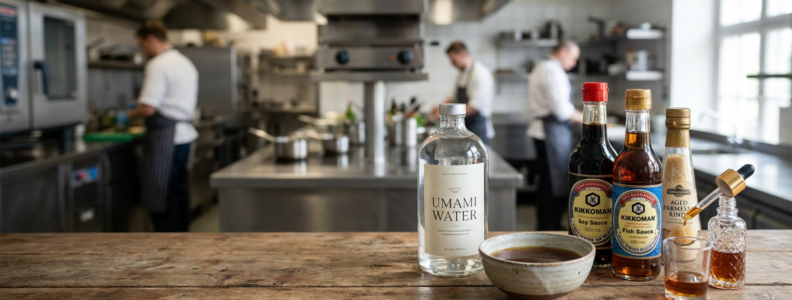
When Marketing Meets Ancient Wisdom (And Gets It Spectacularly Wrong)
Last month, Liquid Death launched their umami-flavored sparkling water with great fanfare, promising the fifth taste in convenient aluminum packaging. Shiitake and kombu extracts, they proclaimed, would deliver that mysterious savory depth that food nerds have been obsessing over for decades. In thirty days, they sold 2.4 million cans to consumers eager to taste what they imagined was liquid magic.

Here’s the thing about umami that these beverage companies conveniently ignore: it’s not a flavor you drink, it’s a foundation you build upon. Walking into my kitchen after a long day, I can smell the difference between water infused with mushroom extract and the slow-simmered dashi my neighbor makes every Sunday morning. One smells like wet cardboard with pretensions. The other fills your entire being with the promise of something nourishing and real.
Professional kitchens understand this distinction because they’ve built their reputations on it. Traditional Japanese restaurants don’t reach for canned umami solutions when they want depth of flavor. They use kombu that’s been aged for two to three years, developing complex glutamate profiles that no factory extraction can replicate. These chefs know that umami isn’t a shortcut you can bottle and sell. It’s the patient result of time, technique, and respect for ingredients.

What the Science Actually Says About These Miracle Waters
The Culinary Institute of America Umami Research recently conducted taste panel studies that should make every umami water enthusiast pause mid-sip. Their findings revealed that eighty-nine percent of commercial umami waters contain less than 0.3 percent actual umami compounds compared to properly made dashi stock.
Think about that number for a moment. You’re paying premium prices for what amounts to expensive placebo water with just enough mushroom essence to convince your brain something significant is happening. Meanwhile, a ten-dollar piece of quality kombu can produce weeks’ worth of stock that actually delivers the umami experience these products promise but never quite achieve.
The disconnect becomes even more glaring when you consider how umami actually works in your mouth. It’s not a standalone sensation like sweetness or saltiness. It’s a supporting player that amplifies other flavors and creates that satisfying sense of completeness we crave in good food. Drinking isolated umami compounds is like trying to appreciate a symphony by listening to only the timpani section.
How Real Kitchens Actually Build Umami (And Why It Matters)
Step into any serious restaurant kitchen during prep hours and you’ll find umami being constructed, not consumed. Chefs simmer bones for eighteen hours, layer fermented pastes, age cheeses, and reduce tomatoes until their natural glutamates concentrate into something approaching alchemy. These processes can’t be rushed or simplified because umami develops through transformation, not extraction.
The mushroom broths that anchor so many professional stocks require careful temperature control, precise timing, and an understanding of how different fungi contribute unique amino acid profiles. Shiitake brings earthiness, but it’s the interaction with other ingredients that creates the complex foundation serious cooks depend on. You can’t replicate this chemistry by adding mushroom extract to carbonated water any more than you can recreate a marriage by reading the wedding announcement.
What’s particularly frustrating about the umami water trend is how it misses the entire point of what makes this taste element so valuable in cooking. Umami works best when it supports and enhances other flavors. When it creates a backdrop that makes simple ingredients taste more like themselves. A perfectly ripe tomato tastes more intensely tomato-like when it’s been seasoned with good salt and perhaps a whisper of aged cheese. That’s umami in action, not whatever’s happening when you crack open a can of mushroom-flavored fizzy water.
The Numbers Don’t Lie: Where Umami Money Actually Goes
According to the Global Umami Market Analysis 2025, the umami market reached $1.7 billion last year, but here’s the revealing part: flavored waters represented only eight percent of those sales while traditional fermented products grew by twenty-three percent. Professional kitchens and serious home cooks are putting their money where umami actually lives. In miso paste, aged cheeses, quality fish sauce, and properly made stocks.
The math tells the real story about where authentic umami demand is heading. While beverage companies chase trendy packaging and marketing angles, the substantial growth is happening in categories that have been delivering real umami for generations. Chefs aren’t switching to umami water for their stocks because they understand what umami actually does in cooking.
This market reality reflects a broader truth about food trends versus food fundamentals. Gimmicky products capture attention and generate initial sales, but sustained growth happens in categories where the product actually improves the cooking experience. Nobody’s replacing their bottle of fish sauce with umami water because fish sauce actually makes food taste better in ways that matter.
Why This Trend Actually Insults Culinary Tradition
Michelin-starred chef Narisawa Yoshihiro didn’t mince words when he called commercial umami waters “an insult to centuries of Japanese culinary tradition” in a recent interview. His reaction reflects a deeper frustration among serious cooks who watch their carefully developed techniques get reduced to marketing buzzwords and oversimplified products.
The art of building umami-rich foundations in Japanese cooking represents generations of refinement, observation, and respect for natural processes. When companies extract a few compounds and claim to have bottled this complexity, they’re not just missing the point. They’re actively misleading consumers about what makes food truly satisfying.
This matters because food trends shape how people think about cooking and eating. When umami gets reduced to something you drink from a can, we lose sight of how this taste element actually functions in creating memorable meals. The subtle interplay between aged kombu and carefully selected bonito flakes that creates authentic dashi can’t be replicated by adding mushroom extract to sparkling water, no matter how clever the marketing.
Next time someone offers you umami water, politely decline and suggest making proper stock together instead. Your taste buds will thank you, and you might just discover that the best umami experiences happen not in aluminum cans, but in kitchens where time and technique still matter more than trendy packaging.